
Pelling 
Pelling – Sikkim’s Grand Balcony to Kanchenjunga
Pelling is not loud, not rushed and certainly not trying too hard to impress. It doesn’t need to. This small Himalayan town in West Sikkim quietly delivers what many destinations promise but rarely manage – an almost uninterrupted, close-up relationship with the Kanchenjunga range, combined with history, monasteries, forests and a deeply rooted mountain culture.
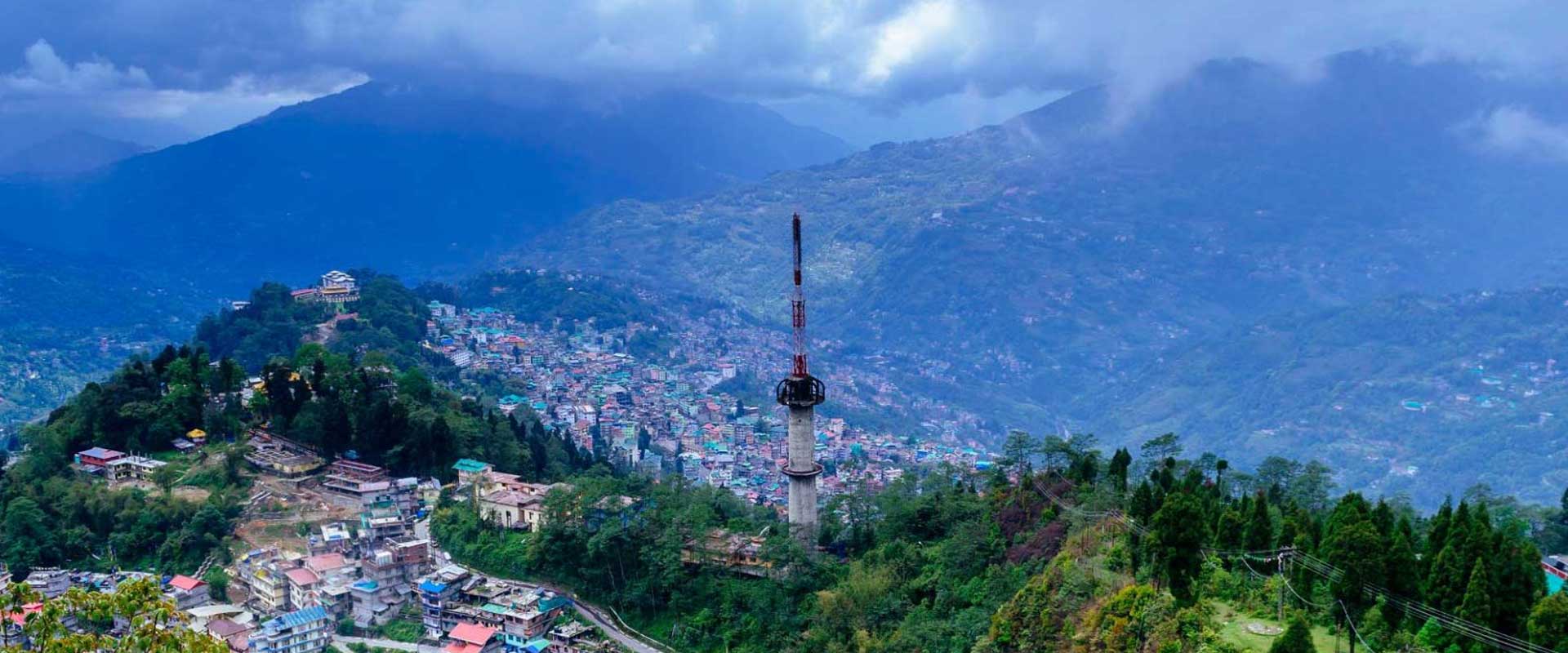
Located roughly 130 km from Siliguri and about 115 km from Gangtok, Pelling sits at an altitude of around 6,800 feet, making it one of the most comfortable high-view destinations in Sikkim. Over the years, it has evolved from a sleepy settlement into the second most important tourist hub in Sikkim, after Gangtok, yet it has managed to retain a sense of calm that seasoned travellers value.
Location, Altitude and Why Pelling Is Special
What sets Pelling apart is not just the height, but the angle. From here, the Kanchenjunga massif appears dramatically close, especially on clear mornings. Peaks like Koktang, Rathong, Kabru, Kabru Dome, Pandim, Siniolchu and Kumbhakaran (Mount Jannu) rise almost in a single sweeping arc. Very few places in India offer such a wide Himalayan panorama while still providing good road access and quality hotels.
Pelling’s importance is not limited to scenery. This region once formed the heart of the former Kingdom of Sikkim, and its monasteries, ruins and sacred landscapes reflect centuries of political and spiritual history.
Weather in Pelling – What to Expect Through the Year
Pelling enjoys a cool temperate climate, but weather plays a crucial role in how much you actually see.
Spring and early summer, from March to June, are among the best times to visit. Days are pleasant, temperatures range between 12°C and 22°C, and skies are generally clear in the mornings, offering excellent Kanchenjunga views.
The monsoon season, from July to September, brings heavy rainfall. While forests turn lush and waterfalls are at their dramatic best, cloud cover often hides the mountains, and road conditions can deteriorate. This is not peak season, but photographers and slow travellers may still enjoy it.
Autumn, from October to November, is considered prime time. Crisp air, sharp visibility and stable weather make this the most reliable season for mountain views.
Winters, from December to February, are cold but not extreme. Day temperatures hover around 5°C to 10°C, nights can drop close to freezing, and snow occasionally dusts higher ridges. Winter sunrises over Kanchenjunga are unforgettable on clear days.
Historical and Cultural Significance of Pelling
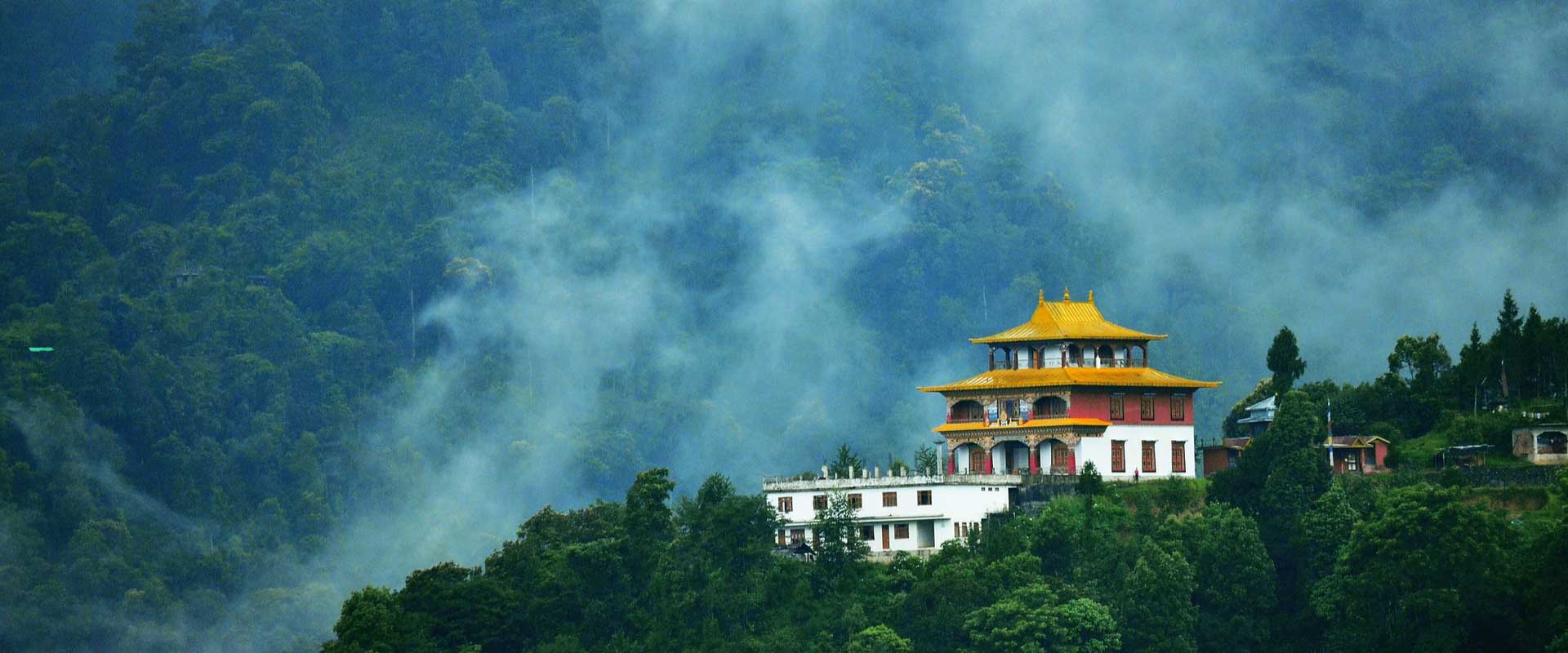
Pelling’s historical importance comes alive at places like Pemayangtse Monastery and the Rabdentse Ruins. These are not just sightseeing spots; they are essential to understanding how Sikkim evolved from a Buddhist kingdom into a modern Indian state.
Pemayangtse Monastery
Established in 1705, Pemayangtse is one of the oldest and most revered monasteries in Sikkim and belongs to the Nyingma-pa sect. The monastery’s three-storeyed structure houses intricate wall paintings, rare sculptures and sacred relics. The highlight is the seven-tiered wooden model of Guru Rinpoche’s celestial abode, a masterpiece of traditional craftsmanship.
Every year, usually in January or February, the monastery hosts the Cham mask dance, a deeply symbolic ritual performance that draws monks and visitors alike.
Rabdentse Ruins
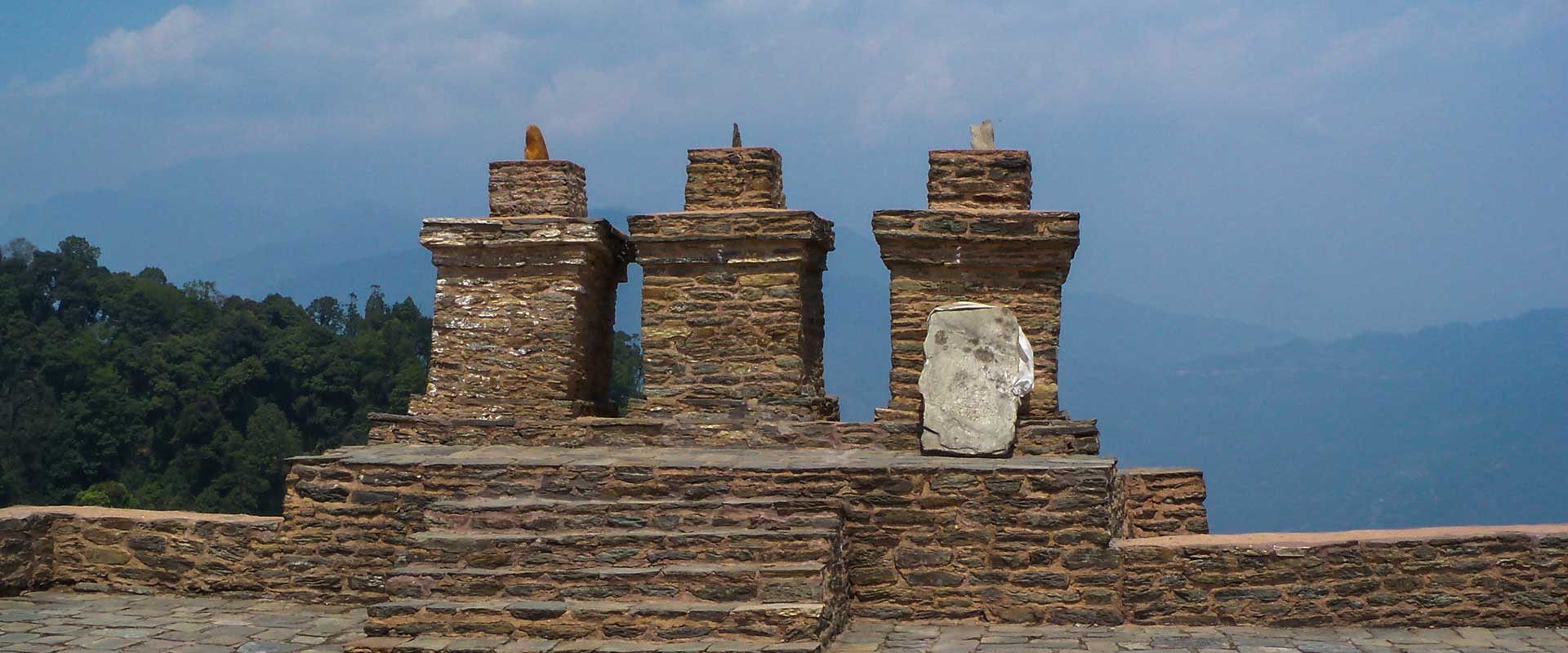
Hidden in forested silence, Rabdentse was the second capital of Sikkim after Yuksom and remained so until 1814. Reached by a short forest walk from near Pemayangtse, the ruins offer sweeping views across a deep valley to the Kanchenjunga range. Standing here, with broken palace walls and prayer flags fluttering, one gets a strong sense of Sikkim’s royal past and its eventual decline.
Monasteries, Skywalk and Sacred Landscapes
Sanga Choeling Monastery and Chenrezig Statue
Perched about 3 km above Pelling, Sanga Choeling Monastery, built in 1697, is among the oldest monasteries in the state. Founded by Lhatsun Chenpo, its name translates to “island of esoteric teaching”. The monastery commands a stunning view over Pelling and the surrounding hills.
In 2018, a towering 137-foot statue of Chenrezig (Avalokiteshvara) was installed nearby. Often mistaken for Buddha, Chenrezig represents compassion and is associated with the mantra Om Mani Padme Hum. The statue has quickly become one of Pelling’s most recognisable landmarks.
Pelling Skywalk
Close to the Chenrezig complex lies the Pelling Skywalk, among the highest glass skywalks in India. Suspended over a deep valley at roughly 7,200 feet, it offers thrilling views of the landscape below and the Himalayan skyline ahead. Visitors should note that vehicles usually charge an additional amount for this excursion, something best clarified while booking sightseeing.
Lakes, Waterfalls and Natural Beauty Around Pelling
Khecheopalri Lake
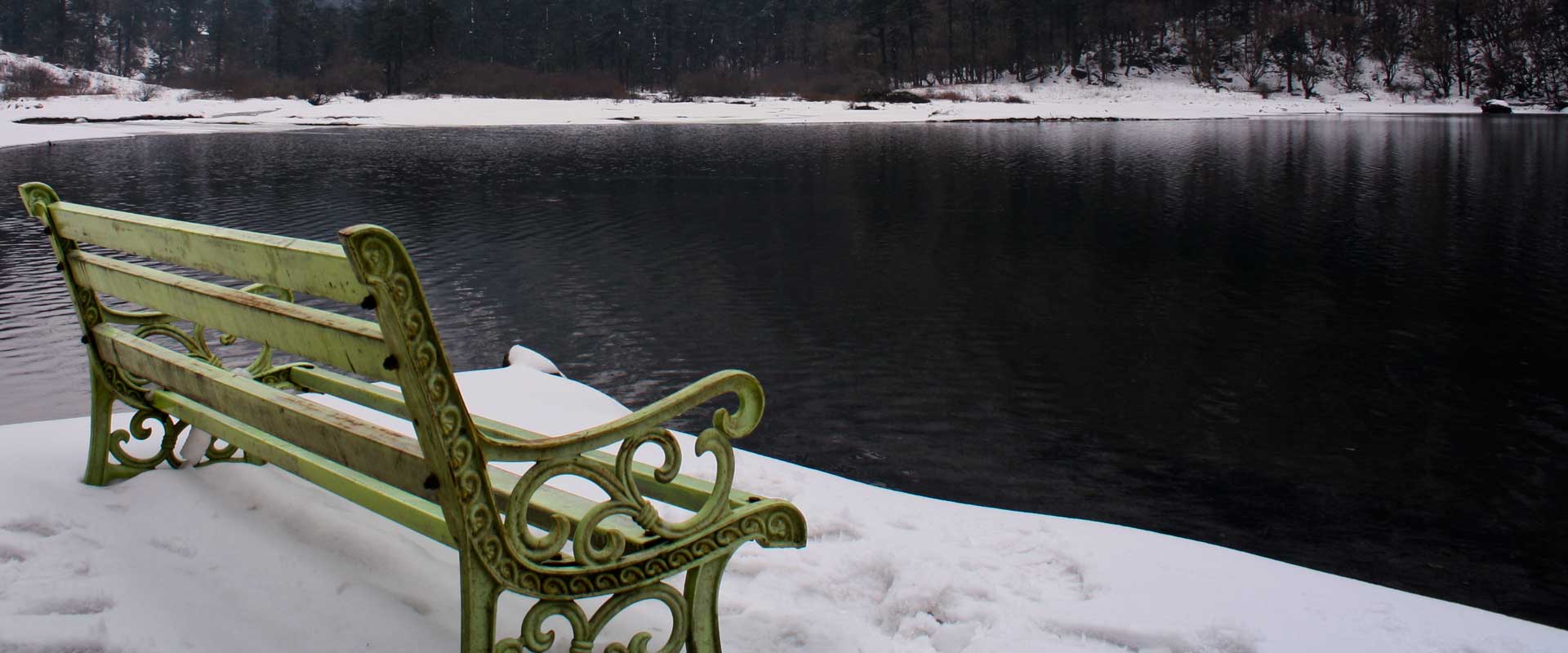
Sacred to both Buddhists and Hindus, Khecheopalri Lake lies beneath dense forest and is believed to fulfil wishes. Local folklore says birds prevent even a single leaf from floating on its surface. A wooden walkway circles the lake, and the atmosphere is serene, contemplative and deeply spiritual.
Waterfalls Near Pelling
Kanchenjunga Waterfall, about 30 km away, cascades dramatically from a height of nearly 100 metres and is especially impressive after monsoon rains.
Rimbi Waterfall, located roughly 10 km from Pelling on the road to Khecheopalri, is a natural stop during sightseeing and is easy to access.
Changey Waterfall, also around 10 km away, is less visited and holds local cultural significance. Its relative isolation makes it appealing to travellers who prefer quieter experiences.
Village Life and Rural Experiences
Darap Village
Just 6 km from Pelling, Darap offers a glimpse into traditional Sikkimese rural life. The village is known for its homestays, warm hospitality and peaceful environment. While Kanchenjunga views are limited due to lower elevation, Darap is ideal for travellers looking to stay away from the bustle of Pelling town and experience everyday mountain life.
Sightseeing Options in Pelling
Most visitors explore Pelling through half-day or full-day sightseeing tours, depending on their length of stay. A half-day usually covers either local monasteries and ruins or the Khecheopalri side, while a full day combines both. Travellers staying longer often extend trips towards Yuksom, adding waterfalls, sacred lakes and forest walks.
When booking Pelling tour packages, it is worth discussing sightseeing combinations in advance, as road conditions and weather can affect pacing.
Treks and Walks Around Pelling
Pelling serves as an excellent base for both serious Himalayan treks and gentle day hikes.
The legendary Dzongri–Goechala–Kanchenjunga Base Camp trek starts from Yuksom, about 35 km away, and remains Sikkim’s most iconic high-altitude trek.
The Chiwa Bhanjang trek, originating from Uttarey, leads into the Singalila range and offers several route variations.
For those preferring shorter walks, there are rewarding 3–4 hour day hikes near Pelling, including forest trails near Darap, routes towards Khecheopalri, and village walks in Hee–Bermiok and Barsey Rhododendron Sanctuary areas.
Hotels and Staying in Pelling
Pelling’s transformation over the past two decades is most visible in its accommodation scene. Almost every ridge-facing building seems designed to capture Kanchenjunga views.
Among well-regarded options are Norbu Ghang Resort and Mount Pandim, both known for location and service. Slightly away from the main town, Pachu Resort, Darap homestays and Tashi Gang Resort offer quieter settings. Tashi Gang, in particular, stands out for its 360-degree mountain views, making it a favourite among serious mountain lovers.
Choosing the right hotel matters in Pelling, as early morning visibility depends heavily on orientation and elevation.
How to Reach Pelling
Pelling is well connected by road to all major destinations in Sikkim and North Bengal. Shared jeeps and reserved taxis operate regularly, though travel times vary significantly depending on road conditions.
From Gangtok, the journey is about 115 km and takes around 5 hours. From Bagdogra Airport or NJP, the drive is approximately 130–135 km, usually requiring 5.5 hours. Routes from Darjeeling, Kalimpong, Ravangla, Jorethang and Geyzing are also commonly used. Many travellers prefer reaching Geyzing first and then continuing the short uphill drive to Pelling.
Frequently Asked Questions About Pelling
Is Pelling suitable for senior citizens?
Yes, provided accommodation is chosen carefully and travel is paced sensibly. Roads are winding but manageable.
How many days are ideal for Pelling?
Two nights are the minimum, while three to four nights allow relaxed sightseeing and nearby excursions.
Is Kanchenjunga visible all year round?
Visibility is best from October to April. Monsoon months often have cloud cover.
Are permits required to visit Pelling?
No permits are needed for Indian nationals. Foreign travellers require an Inner Line Permit for Sikkim.
Is Pelling better than Gangtok for views?
For mountain views, absolutely yes. For urban experiences, Gangtok has more to offer.
Plan Your Pelling Trip with Local Experts
Pelling rewards travellers who plan well and stay long enough to let the mountains reveal themselves. From choosing the right hotel to timing your sightseeing for clear skies, local expertise makes a real difference.
NBTT Travel Solution Private Limited specialises in carefully crafted Pelling tour packages, reliable hotel bookings, personalised sightseeing plans, treks and transport across Sikkim. With deep regional knowledge and on-ground support, NBTT ensures your journey is smooth, unhurried and authentic.
For customised itineraries and expert guidance, get in touch with NBTT at +919733300696 and experience Pelling the way it is meant to be experienced.
Sikkim Darjeeling Experiential Tour
Kalimpong (1 Night), Gangtok (2), Pelling (1 Night), Darjeeling (2 Nights)
Gangtok Pelling Darjeeling Tour Plan
Gangtok (2+1 Nights), Lachung (2 Nights), Pelling (2 Nights), Darjeeling (2 Nights)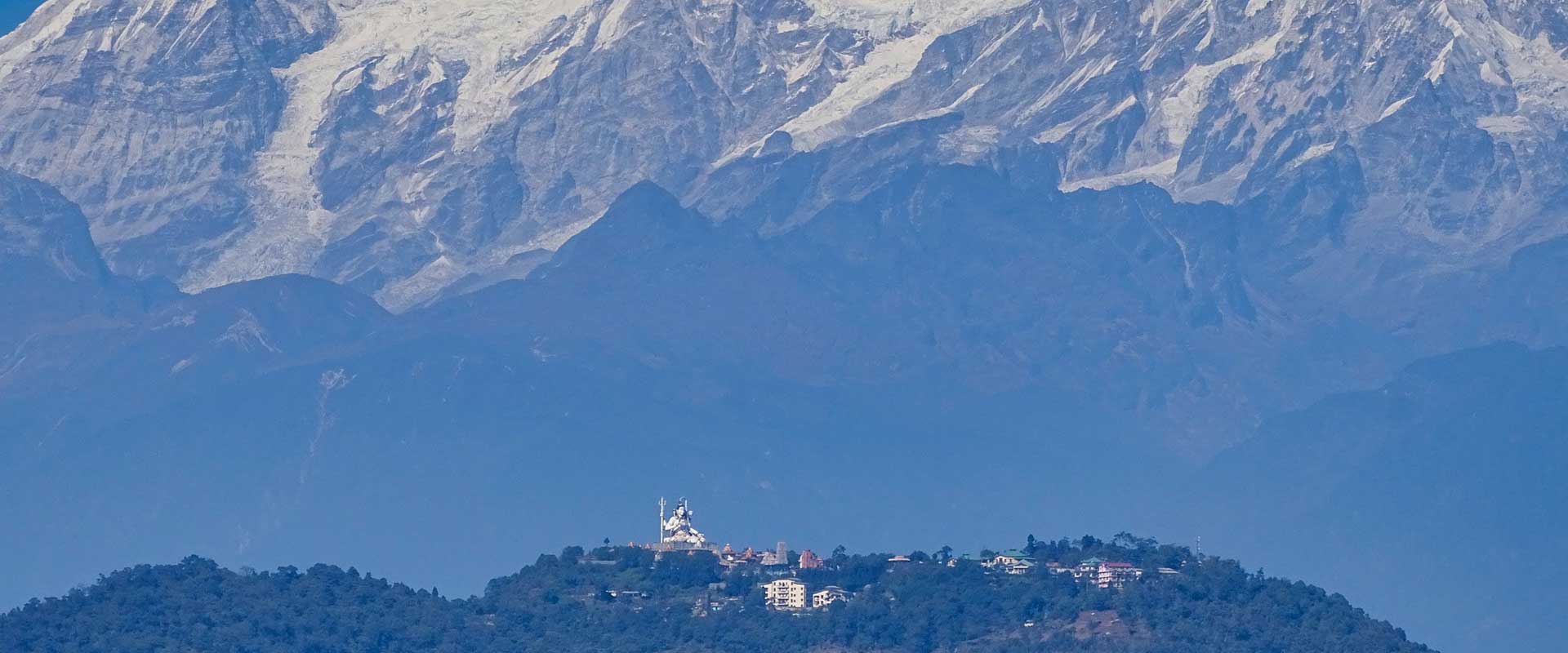

East Himalaya
-
Address:NBTT Travel Solution Private Limited, 19, MN Sarkar Road, Sevoke More Siliguri, State : West Bengal, Country : India. PIN : 734001
-
Call Us at:
9733000-592/593/594 -
Mail Us:
info@east-himalaya.com
