
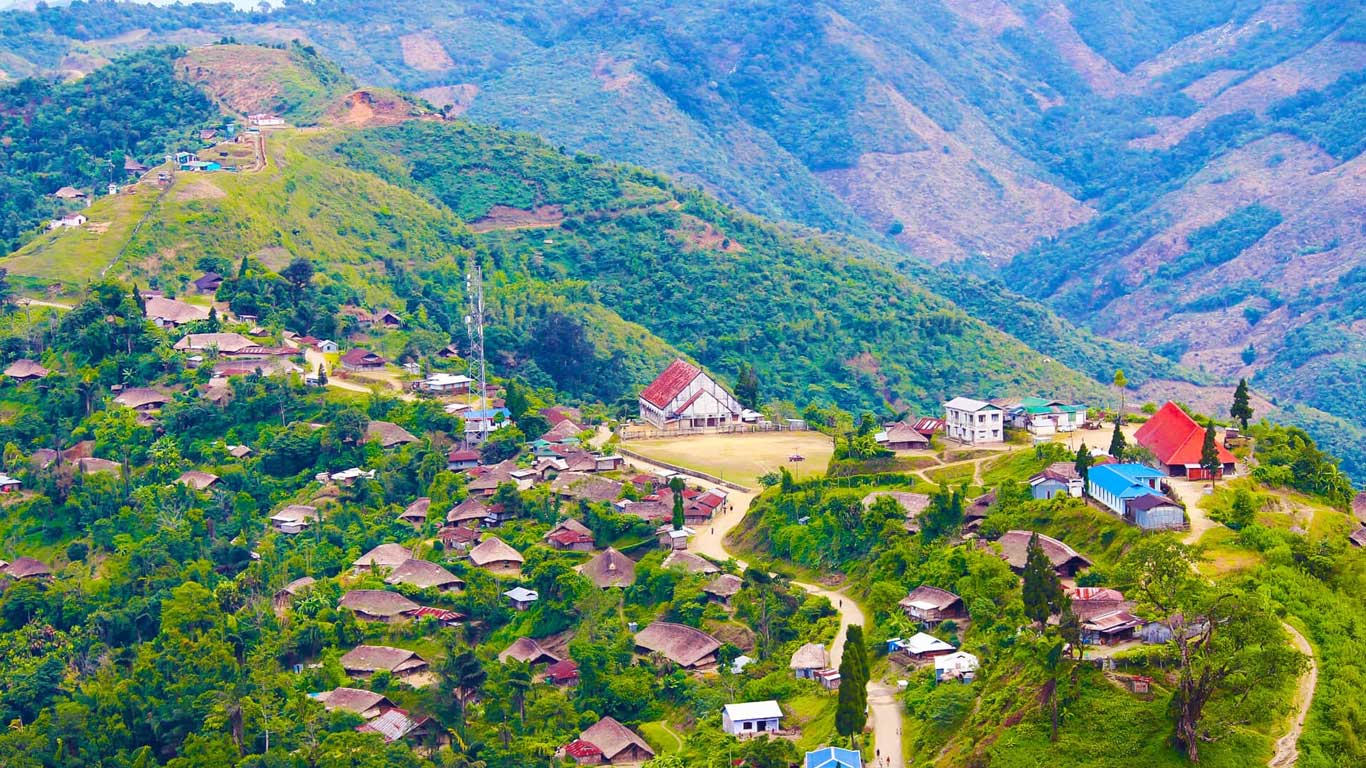

Mon, Nagaland – Into the Land of the Konyak Warriors
Far away from the busy circuits of mainstream tourism, Mon sits quietly in the northernmost corner of Nagaland, almost touching the edges of India itself. Both a small town and an entire district, Mon lies at a fascinating crossroads—Arunachal Pradesh to the north, Assam to the west, Myanmar to the east, and Tuensang district to the south. This geographical isolation has preserved something rare: a raw, deeply rooted tribal culture that still shapes everyday life.
Mon town serves as the district headquarters, but the real soul of the region lies scattered across its villages and forested hills. Administratively, the district is broadly divided into Upper Mon, covering Longching, Chen, Mopong and Tobu, and the Lower (Kower) region, which includes Mon, Tizit and Naginimora. For travellers seeking authentic tribal encounters, dramatic landscapes and stories that feel almost untouched by time, Mon is one of Nagaland’s most powerful destinations.
This is not a place of luxury resorts or quick sightseeing. Mon is about experience, about listening, observing, and slowly understanding a way of life shaped by mountains, memory and myth.
Landscape, Isolation and the Appeal of Mon
Mon’s appeal lies in its offbeat character. Dense forests roll into misty ridgelines, villages perch on hilltops, and narrow roads snake through landscapes dotted with banana groves, orange trees and organic farms. Trekkers, photographers and cultural travellers find the region especially rewarding because nothing here feels curated for tourists.
The scenery alternates between steep mountain slopes and wide valley views, while daily life revolves around agriculture, village councils and seasonal festivals. The sense of distance from urban India is real—and that is exactly why travellers come here.
How to Reach Mon
Reaching Mon requires patience, but the journey itself is part of the experience.
The nearest airport and railway station are at Dimapur, approximately 260 kilometres away, a drive that usually takes around 7 to 8 hours, depending on road conditions and weather. Dimapur is well connected by flights and trains to Guwahati, Kolkata and Delhi, making it the main gateway into Nagaland.
From Dimapur, travellers usually proceed by private vehicle or shared taxis, passing through Assam plains before climbing into the hills of eastern Nagaland. Roads are motorable but can be slow, especially during the monsoon months, which makes planning with experienced operators essential.
Places to See in and Around Mon
Shangnyu Village – Legacy of the Konyak Chiefs
Located just 6 kilometres from Mon town, Shangnyu Village is one of the most culturally significant Konyak settlements in the region. The village is best known for the house of the Angh, or tribal chief, which is believed to be over 500 years old. The structure itself is a living museum—wooden beams darkened by age, ceremonial carvings, and symbols of power and protection.
A tall wooden structure, around eight feet high, stands as a reminder of the village’s warrior past. Combined with sweeping views of the surrounding hills, Shangnyu offers a strong introduction to Konyak history and craftsmanship.
Longwa Village – Where Borders Don’t Matter
Perhaps the most talked-about village in Mon district, Longwa (or Lungwa) lies around 35 kilometres from Mon town and straddles the India–Myanmar international border. Remarkably, the border runs straight through the village—and even through the house of the Angh.
Here, people live seamlessly across two countries, a reality quietly accepted by both governments. Life in Longwa moves at its own rhythm, untouched by geopolitical lines. The village is also known for its elevated location, offering commanding views of the surrounding hills, and for its strong adherence to traditional Konyak customs.
Veda Peak – The Highest Point in Mon District
About 70 kilometres from Mon town, Veda Peak is the highest point in the district and a rewarding destination for those willing to travel deeper into the hills. On clear days, the view extends across the Assam plains, with glimpses of the Brahmaputra River and even the Chindwin River basin in Myanmar.
The journey to Veda Peak passes through remote villages and forest tracks, making it ideal for travellers interested in photography, nature and slow exploration.
Other Experiences Around Mon
Beyond the better-known sites, villages like Chui, Naginimora, and the bustling local markets of Mon town offer quieter insights into daily life. Handcrafted jewellery, traditional textiles and woodwork reflect the artistic heritage of the Konyak people and make meaningful souvenirs.
The Konyak Nagas – People, Identity and Change
Mon is home primarily to the Konyak Nagas, one of Nagaland’s most distinctive tribes and historically known as fierce warriors and headhunters. Though headhunting ended decades ago, its legacy survives in symbols, stories and architecture.
Older Konyak men often bear facial tattoos, once marks of bravery and achievement, while ceremonial headgear adorned with feathers still appears during festivals. Traditional homes display hornbill beaks, animal horns, elephant tusks and wooden carvings, all rich in symbolism.
At the centre of village life stands the Angh, the hereditary chief. The Angh’s house is the largest structure in the village, traditionally displaying human skulls at the entrance—now preserved as historical artefacts rather than symbols of power.
With education and exposure, younger Konyaks are increasingly adopting modern lifestyles, yet many consciously preserve language, festivals and rituals, ensuring that tradition evolves rather than disappears.
Festivals of Mon – Aoleang Monyu
The most important and visually striking festival of the Konyak Nagas is Aoleang Monyu, celebrated in early April to mark the arrival of spring and the New Year.
During the festival, villages come alive with colour. Men and women wear traditional attire, perform age-old dances, sing folk songs and participate in rituals seeking prosperity and protection. For visitors, Aoleang Monyu offers an extraordinary opportunity to witness Konyak culture in its most vibrant form, provided it is approached with sensitivity and respect.
Weather in Mon and Best Time to Visit
Mon experiences a subtropical hill climate. Summers from April to June are warm but not extreme, with temperatures generally ranging between 20°C and 30°C. The monsoon arrives around June and continues till September, bringing heavy rainfall that makes the landscape lush but roads challenging.
Winters, from November to February, are cool and dry. Temperatures can drop to 6–8°C at night, especially in higher villages, but days remain pleasant.
The best time to visit Mon is from October to April, when the weather is comfortable, roads are more reliable, and festivals like Aoleang Monyu add cultural depth to the journey.
Where to Stay and Travel Tips
Accommodation in Mon is simple but welcoming. Guesthouses, basic hotels and village homestays offer clean rooms and warm hospitality rather than luxury. Staying in villages is often the best way to understand local life, food and customs.
Travellers should carry cash, as ATMs are limited, and mobile connectivity can be patchy outside Mon town. Photography is usually allowed, but it is always polite to ask before photographing people or private homes.
Frequently Asked Questions About Mon, Nagaland
Is Mon safe for tourists?
Yes. Mon is generally safe for travellers, especially those visiting with local guides or organised tour operators. Respect for local customs goes a long way.
Do I need special permits to visit Mon?
Indian citizens require an Inner Line Permit (ILP) to visit Nagaland. Foreign nationals need a Protected Area Permit. These can be arranged in advance or through experienced travel companies.
Can foreigners visit Longwa Village?
Yes, but permits and local permissions are important. Guided visits are recommended.
How many days are ideal for Mon?
A minimum of 3–4 days allows you to explore Mon town, Shangnyu and Longwa at a relaxed pace.
Is Mon suitable for family travel?
It suits culturally curious families and experienced travellers more than luxury-focused or very young children.
Plan Your Mon Journey with NBTT
Mon is not a destination you rush through—it demands time, understanding and the right local connections. NBTT Travel Solution Private Limited specialises in immersive Northeast India journeys, including carefully curated Mon tour packages, village experiences, cultural interactions and responsible travel planning.
If you are looking to explore the Konyak heartland with insight and sensitivity, call or WhatsApp NBTT at +91 9733300696. With experienced ground support and deep regional knowledge, NBTT ensures your journey into Mon is meaningful, safe and unforgettable.
East Himalaya
-
Address:NBTT Travel Solution Private Limited, 19, MN Sarkar Road, Sevoke More Siliguri, State : West Bengal, Country : India. PIN : 734001
-
Call Us at:
+91-9733300696 -
Mail Us:
info@east-himalaya.com
