

Tezu Travel Guide
Orientation – Exploring Tezu
Tezu is the administrative headquarters of Lohit District in eastern Arunachal Pradesh and serves as one of the principal entry points for exploring the state's eastern frontier. Located at an elevation of approximately 185 metres, the town sits on the northern bank of the Lohit River, one of the major tributaries of the Brahmaputra.
Unlike the high mountain towns of western Arunachal, Tezu occupies the transition zone between the Himalayan foothills and the plains of Assam. This geography creates a landscape of river valleys, forested hills, agricultural land and tribal villages, making Tezu an excellent base for travellers interested in culture, wildlife, pilgrimage and road journeys across eastern Arunachal Pradesh.
Over the past decade, Tezu has become significantly more accessible following improvements to highways, the construction of major bridges across the Brahmaputra system and the commencement of commercial flight operations at Tezu Airport. Although the town remains quieter than many tourist destinations, it has gradually developed into an important hub for visitors travelling towards Parshuram Kund, Walong, Dong, Namsai, Namdapha National Park and the Mishmi Hills.
For many visitors, Tezu Travel is not limited to sightseeing within the town. Instead, it forms the starting point for exploring some of the least-visited regions of Arunachal Pradesh.
A Brief History of Tezu
Tezu developed primarily as an administrative centre after Indian independence. While the town itself is relatively modern, the surrounding Lohit Valley has been inhabited for centuries by indigenous communities, particularly the Mishmi tribes, whose history is closely connected with the mountains and forests of eastern Arunachal.
Trade routes once connected this region with Tibet and northern Myanmar. Although these historic routes are no longer used for commercial trade, they played an important role in shaping the cultural identity of the district.
The nearby Parshuram Kund has long been one of the most important Hindu pilgrimage centres in Northeast India, drawing devotees from Assam, West Bengal, Bihar, Nepal and other parts of India during the annual Makar Sankranti festival.
Today, Tezu continues to grow steadily while maintaining its role as the principal administrative, commercial and educational centre of Lohit District.
Geography and Climate
The surrounding landscape is shaped by the mighty Lohit River, which originates in eastern Tibet before entering Arunachal Pradesh through steep mountain valleys.
Dense forests cover much of the district, while fertile river plains support agriculture and horticulture.
Unlike higher Himalayan destinations, Tezu experiences a humid subtropical climate.
Summers are warm, with temperatures generally ranging between 22°C and 34°C.
The monsoon arrives between June and September, bringing heavy rainfall that replenishes rivers but occasionally causes landslides on mountain roads.
Winter remains comparatively mild, with temperatures between 10°C and 24°C, making it one of the most comfortable seasons for visitors.
Humidity remains relatively high throughout much of the year, although winter offers the clearest weather.
Getting There
Reaching Tezu has become considerably easier than it was only a few years ago.
Tezu Airport now operates scheduled commercial flights under regional connectivity schemes. Flight frequency varies, so travellers should confirm current schedules before finalising their plans. Many visitors continue to prefer Dibrugarh Airport in Assam because of its wider range of daily flights connecting Kolkata, Delhi, Guwahati, Bengaluru and several other Indian cities.
The drive from Dibrugarh to Tezu generally takes around four to five hours, depending upon traffic and weather conditions.
The nearest major railway station is Tinsukia, approximately 120–125 kilometres from Tezu. Tinsukia is well connected with Guwahati, Kolkata, Delhi and other important railway junctions.
Dibrugarh railway station is another convenient option for travellers arriving from eastern and northern India.
Road travel remains the most popular way of reaching Tezu. The town is connected by National Highway 13, forming part of the Trans-Arunachal Highway network.
Common road distances include:
Dibrugarh – approximately 170 kilometres
Tinsukia – approximately 125 kilometres
Namsai – approximately 80 kilometres
Parshuram Kund – approximately 46 kilometres
The construction of the Bhupen Hazarika Setu (Dhola–Sadiya Bridge) has dramatically reduced travel time from Assam into eastern Arunachal Pradesh, making Tezu much more accessible throughout the year.
Hiring a dedicated vehicle remains the most comfortable option, particularly for travellers planning to explore multiple destinations.
Planning Your Tezu Travel
Most visitors spend two to three nights in Tezu before continuing towards Dong, Walong, Parshuram Kund or Namsai.
A well-designed Tezu tour plan generally combines the town with nearby religious, historical and natural attractions instead of treating Tezu as a standalone destination.
Travellers interested in photography, tribal culture or longer road expeditions often include Tezu as part of a wider itinerary covering eastern Arunachal Pradesh.
Major Attractions
Although Tezu itself is a compact town, its surrounding region contains several places of historical, religious and ecological importance.
The following destinations are usually included in most Tezu Travel itineraries.
Parshuram Kund
Located about 46 kilometres from Tezu, Parshuram Kund is among the most important pilgrimage centres in Northeast India.
According to Hindu tradition, Lord Parshuram performed penance here after obeying his father's command to kill his mother. It is believed that bathing in the waters of the Lohit River at this location symbolises spiritual purification.
Every year during Makar Sankranti in January, tens of thousands of pilgrims arrive from across India. Temporary markets, religious gatherings and cultural activities transform the otherwise quiet valley into one of Arunachal Pradesh's largest annual festivals.
Outside the festival period, Parshuram Kund offers a peaceful environment for visitors interested in mythology, river landscapes and local culture.
Tezu Monastery
One of the principal religious landmarks in town is the Tezu Monastery, also known as the Thupten Gatseling Monastery.
Built in Tibetan Buddhist architectural style, the monastery overlooks the surrounding valley and provides insight into the growing Buddhist community of eastern Arunachal Pradesh.
Visitors can observe prayer ceremonies, colourful murals, Buddhist scriptures and traditional religious art while enjoying views across the surrounding hills.
The monastery is particularly active during Buddhist festivals celebrated by local communities.
Tezu Botanical Garden
The Botanical Garden serves as one of the town's recreational spaces.
It contains a collection of indigenous plant species from eastern Arunachal Pradesh and provides visitors with an introduction to the region's botanical diversity.
The garden is frequently visited by students, researchers and local families.
Glow Lake
Among the lesser-known trekking destinations of eastern Arunachal Pradesh, Glow Lake occupies a special place. Located inside the Kamlang Wildlife Sanctuary, the lake cannot be reached by road. The journey involves a demanding multi-day trek through dense forests, mountain streams and high ridges.
Glow Lake sits at an altitude of around 5,000 feet (approximately 1,500 metres) and remains largely unexplored due to its difficult approach. The trekking route passes through forests inhabited by several species of birds, butterflies and mammals, making it particularly attractive to experienced trekkers, wildlife enthusiasts and photographers.
The trek normally starts from the Wakro area, and travellers should always be accompanied by registered local guides. Camping equipment, food supplies and necessary permissions must be arranged before entering the sanctuary. Mobile connectivity is almost non-existent once inside the forest.
Kamlang Wildlife Sanctuary
Spread across more than 780 square kilometres, Kamlang Wildlife Sanctuary protects one of the most biologically rich forest ecosystems in eastern Arunachal Pradesh.
The sanctuary supports tropical evergreen forests, semi-evergreen forests and higher-altitude broadleaf forests. Wildlife recorded here includes elephants, tigers, leopards, clouded leopards, Himalayan black bears, gaur, barking deer, serow, hoolock gibbons and numerous smaller mammals.
Birdwatchers frequently visit Kamlang because of its rich avian diversity. Hornbills, barbets, woodpeckers, laughing thrushes, eagles and several migratory species have been recorded here.
Unlike commercial wildlife destinations, Kamlang offers a more natural experience. Sightings require patience, and much of the attraction lies in walking through intact forest rather than expecting guaranteed encounters with animals.
Dong – India's First Sunrise Village
One of the most popular excursions from Tezu is the journey to Dong Village, located close to the India-China border.
Dong became well known because it is considered one of the first inhabited places in India to receive the morning sunlight. Travellers usually arrive the previous evening and begin hiking before dawn to the designated sunrise viewpoint.
The drive from Tezu takes roughly seven to eight hours, making it suitable as part of a multi-day itinerary rather than a day trip.
Besides the sunrise, the route itself passes through remote valleys, mountain rivers and villages belonging to the Meyor community, offering visitors an insight into life in one of India's easternmost regions.
Walong
Further beyond Dong lies Walong, a destination remembered for both its mountain setting and its place in modern Indian history.
Walong was one of the major battlefields during the 1962 Indo-China War, and several war memorials commemorate the soldiers who fought here.
The Lohit River flows through the valley, while nearby mountain roads lead towards Kibithu, India's eastern frontier. Travellers interested in military history, border regions and remote Himalayan settlements often combine Walong with Tezu.
Wakro
Situated between Tezu and Parshuram Kund, Wakro is known for its orange orchards, forest landscapes and the nearby entrance to Kamlang Wildlife Sanctuary.
The region has become increasingly popular among travellers who prefer quieter rural experiences. During the orange season, usually between November and January, local orchards produce some of the finest oranges in Arunachal Pradesh.
Several short village walks can also be arranged from Wakro, allowing visitors to observe traditional Mishmi settlements and agricultural practices.
Lohit River
The Lohit River dominates the geography of the district. Originating in eastern Tibet, it descends rapidly through the mountains before entering the plains of Assam and eventually joining the Brahmaputra.
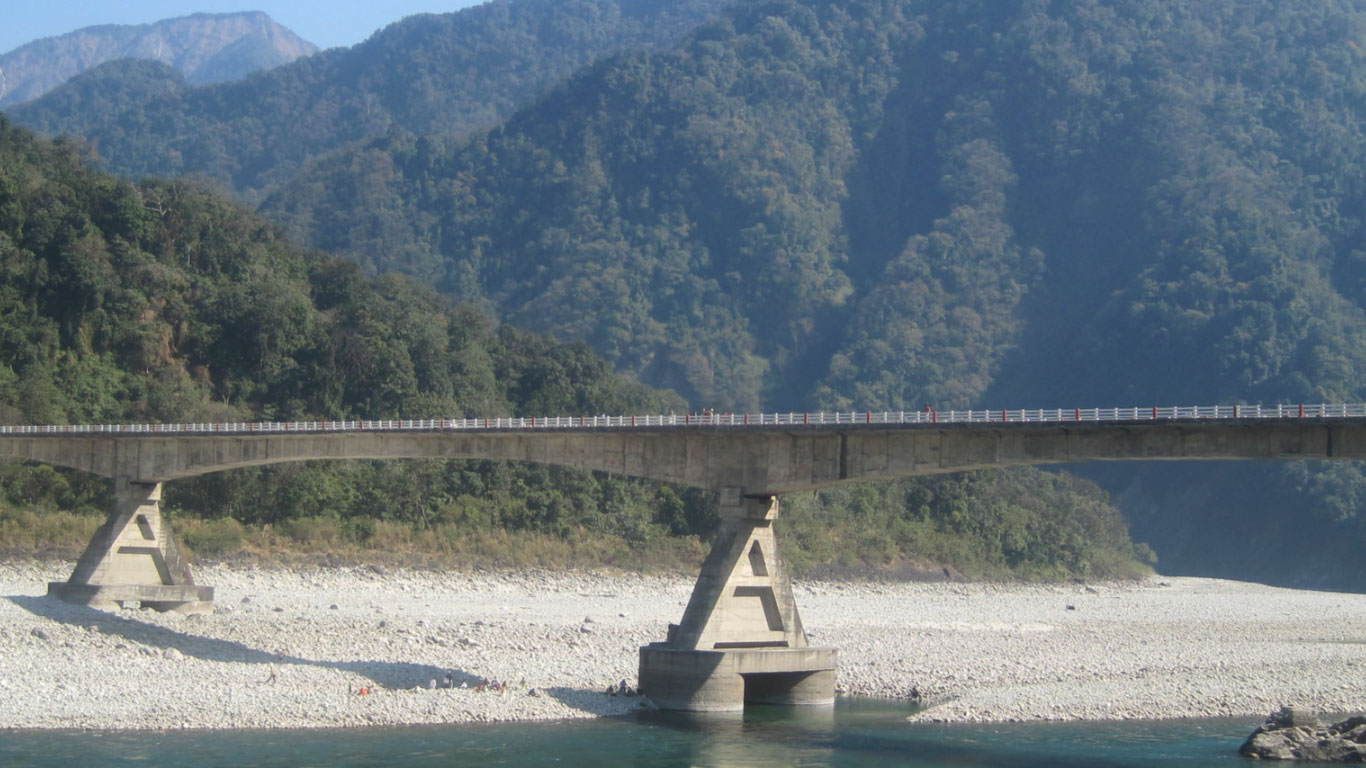
Unlike many Himalayan rivers that flow through narrow gorges, sections of the Lohit near Tezu widen into expansive riverbeds lined with smooth boulders and gravel banks.
During winter, several viewpoints along the river become accessible, providing opportunities for photography, birdwatching and quiet walks.
The river also plays an important role in local agriculture, fisheries and transportation.
Local People, Demography and Language
Tezu represents one of the most culturally diverse towns in eastern Arunachal Pradesh.
Although the Mishmi tribes form the traditional inhabitants of the surrounding region, Tezu has gradually developed into a multicultural town where people from several tribal communities, Assam and other parts of India now live and work.
The principal indigenous communities include the Digaru Mishmi, Kaman Mishmi (Miju Mishmi) and Idu Mishmi, each maintaining distinct traditions, dialects and social customs.
Hindi is widely spoken throughout Tezu, making communication relatively easy for visitors. English is commonly used in schools, government offices and tourism establishments.
Several tribal languages continue to be spoken within villages, while Assamese is also understood by many residents because of Tezu's long-standing links with neighbouring Assam.
Education levels in Tezu are relatively high compared with many remote towns of Arunachal Pradesh, and the district continues to develop as an educational centre for eastern Arunachal.
Tribals and Their Culture
The tribal communities around Tezu possess cultural traditions that have evolved over centuries within the forests and mountains of eastern Arunachal Pradesh.
The Mishmi people are recognised for their finely woven textiles, cane and bamboo craftsmanship, wood carving and intricate bead ornaments.
Traditional houses are generally constructed using locally available timber and bamboo, designed to suit the humid climate and frequent rainfall.
Agriculture continues to be an important occupation, with rice, maize, millet, vegetables and oranges being cultivated across the district.
Traditional food commonly includes rice, smoked meat, bamboo shoots, leafy vegetables, fermented soybean preparations and locally collected herbs.
Visitors who spend time in nearby villages often gain a better understanding of the close relationship between the local communities and the surrounding forests.
Local Festivals of Tezu
Festivals remain central to community life in Tezu and the surrounding Lohit district. While modern education and urbanisation have influenced daily life, traditional celebrations continue to preserve tribal identity, folklore and religious beliefs.
Tamladu Festival
The Tamladu Festival is one of the most significant celebrations of the Mishmi community. Observed every year during February, it is dedicated to the deities believed to protect people, crops, forests and domestic animals.
The festival begins with elaborate rituals performed by tribal priests, followed by community gatherings, traditional songs, dances and feasts. Visitors attending Tamladu gain an opportunity to observe ceremonial attire, indigenous musical instruments and age-old customs that are still practised today.
Unlike commercially organised festivals, Tamladu remains largely community-driven, allowing travellers to witness genuine local traditions.
Makar Sankranti Pilgrimage
Although centred around nearby Parshuram Kund, the annual Makar Sankranti pilgrimage has a significant impact on Tezu.
During mid-January, thousands of pilgrims arrive from across India, Nepal and Bhutan. Tezu becomes the principal transit town, with hotels, transport operators, markets and restaurants operating at full capacity.
Temporary bazaars selling handicrafts, bamboo products, religious items and local food create a lively atmosphere throughout the district.
For photographers and cultural travellers, this period offers valuable opportunities to observe interactions between pilgrims and indigenous communities.
Buddhist Celebrations
The Buddhist communities around Tezu celebrate important festivals such as Losar, the Tibetan New Year, with prayers, cultural performances and traditional meals.
The Tezu Monastery becomes the focal point of these celebrations, attracting both local devotees and visitors.
Best Time to Visit Tezu
The Best time to visit Tezu Tour depends upon your interests, although most travellers prefer the period between October and April.
October to November - The monsoon has withdrawn, rivers begin to settle and road conditions improve considerably. The surrounding forests remain green after the rains, making this an excellent season for sightseeing and longer road journeys.
December to February - Winter is considered one of the finest seasons for Tezu Travel. Daytime temperatures remain comfortable, skies are generally clear and humidity is lower than during summer. This is also the ideal period for visiting Parshuram Kund, especially during the Makar Sankranti festival. Birdwatching and photography conditions are particularly favourable.
March to April - Spring brings warmer temperatures along with flowering trees across the hills. Road conditions remain good, making this another excellent season for travellers planning extended tours covering Tezu, Walong, Namdapha and Namsai.
May - Humidity begins increasing before the arrival of the southwest monsoon. Although travel remains possible, afternoon showers become more frequent.
June to September - Heavy rainfall affects much of eastern Arunachal Pradesh during the monsoon. Landslides, temporary road closures and swollen rivers may disrupt travel schedules. Unless your itinerary specifically requires visiting during this period, most visitors prefer avoiding the monsoon months.
Hotels and Resorts in Tezu
Accommodation options have steadily improved over the past decade.
Visitors can choose between government tourist lodges, privately operated hotels, guest houses and family-run homestays.
Although Tezu does not offer luxury resorts comparable to larger hill stations, most properties provide comfortable rooms, attached bathrooms, hot water and in-house dining facilities.
Business travellers generally stay near the town centre, while leisure visitors often prefer quieter accommodation overlooking nearby hills or the Lohit valley.
Advance booking becomes particularly important during the Makar Sankranti festival, government events and holiday periods.
Those travelling further towards Walong or Dong should finalise accommodation before leaving Tezu, as options become much more limited in the upper Lohit region.
Tezu Car Rental
Public transport in eastern Arunachal Pradesh is limited, and sightseeing attractions are spread across considerable distances. Hiring a dedicated vehicle remains the most practical option for exploring the region comfortably.
A Tezu Car Rental is particularly useful if your itinerary includes Parshuram Kund, Wakro, Glow Lake, Dong, Walong, Namsai, Namdapha National Park or other destinations in eastern Arunachal Pradesh. Experienced local drivers are familiar with mountain roads, weather conditions and permit check posts, making the journey smoother and safer.
Vehicles ranging from hatchbacks and sedans to SUVs and tempo travellers are available depending on group size and travel requirements. SUVs are generally recommended for longer journeys into the higher reaches of Lohit and Anjaw districts.
If you are arriving by air or rail, arranging your vehicle in advance helps avoid delays, particularly during the pilgrimage season and public holidays. A well-planned Tezu tour plan normally includes airport transfers, sightseeing, accommodation and permits as part of a single package.
Permits Required
Like all destinations in Arunachal Pradesh, Tezu requires visitors to obtain the necessary travel permits before entering the state. Indian citizens must obtain an Inner Line Permit (ILP), which can be applied for online or through designated Arunachal Pradesh government offices. Visitors should carry both printed and digital copies of their permit, along with a valid government-issued photo identity card. Foreign nationals require a Protected Area Permit (PAP). Current regulations may change from time to time, so travellers should verify the latest requirements before confirming their itinerary. Additional permissions may be required for travel to sensitive border regions such as Walong, Dong and Kibithu. Travellers should also be prepared for permit verification at various police and security checkpoints.
Frequently Asked Questions About Tezu
How many days should I spend in Tezu?
Two to three days are sufficient to explore Tezu and nearby attractions. If you intend to visit Walong, Dong or Glow Lake, plan at least five to seven days.
What is the best time to visit Tezu?
The Best time to visit Tezu is from October to April, when road conditions are generally good, and the weather is pleasant for sightseeing.
Can Tezu be visited throughout the year?
Yes, although travel during the monsoon season may be affected by heavy rainfall and occasional landslides.
How far is Parshuram Kund from Tezu?
Parshuram Kund is approximately 46 kilometres from Tezu and usually takes around one and a half hours by road.
Plan Your Tezu Tour with NBTT Travel Solution Private Limited
Planning a journey through eastern Arunachal Pradesh requires more than booking hotels. Road conditions, permits, transport, seasonal changes and local logistics all need careful coordination.
NBTT Travel Solution Private Limited has been organising tours across the Eastern Himalayas since 2002 and has extensive experience operating throughout Arunachal Pradesh. We arrange complete Tezu Travel services, including customised itineraries, permits, accommodation, experienced drivers, sightseeing, airport transfers and multi-day overland journeys.
Whether you require a short Tezu tour plan, a dedicated Tezu Car Rental, or a comprehensive Arunachal Pradesh circuit covering Tawang, Ziro, Pasighat, Namdapha, Mechuka, Roing and Walong, our team can design an itinerary suited to your interests and travel style.
For bookings and personalised tour planning, contact NBTT Travel Solution Private Limited on +91 9733300696.
East Himalaya
-
Address:NBTT Travel Solution Private Limited, 19, MN Sarkar Road, Sevoke More Siliguri, State : West Bengal, Country : India. PIN : 734001
-
Call Us at:
+91-9733300696 -
Mail Us:
info@east-himalaya.com
