

Yumthang Valley Travel Guide – North Sikkim’s Valley of Flowers
Tucked deep into the high Himalayas of North Sikkim, Yumthang Valley is one of those rare destinations that still feels raw, seasonal and slightly unpredictable, in the best possible way. Officially located in the Mangan district of Sikkim, formerly known as North District, Yumthang lies around 140 kilometres north of Gangtok, with the small mountain village of Lachung acting as the base for all travel into the valley.
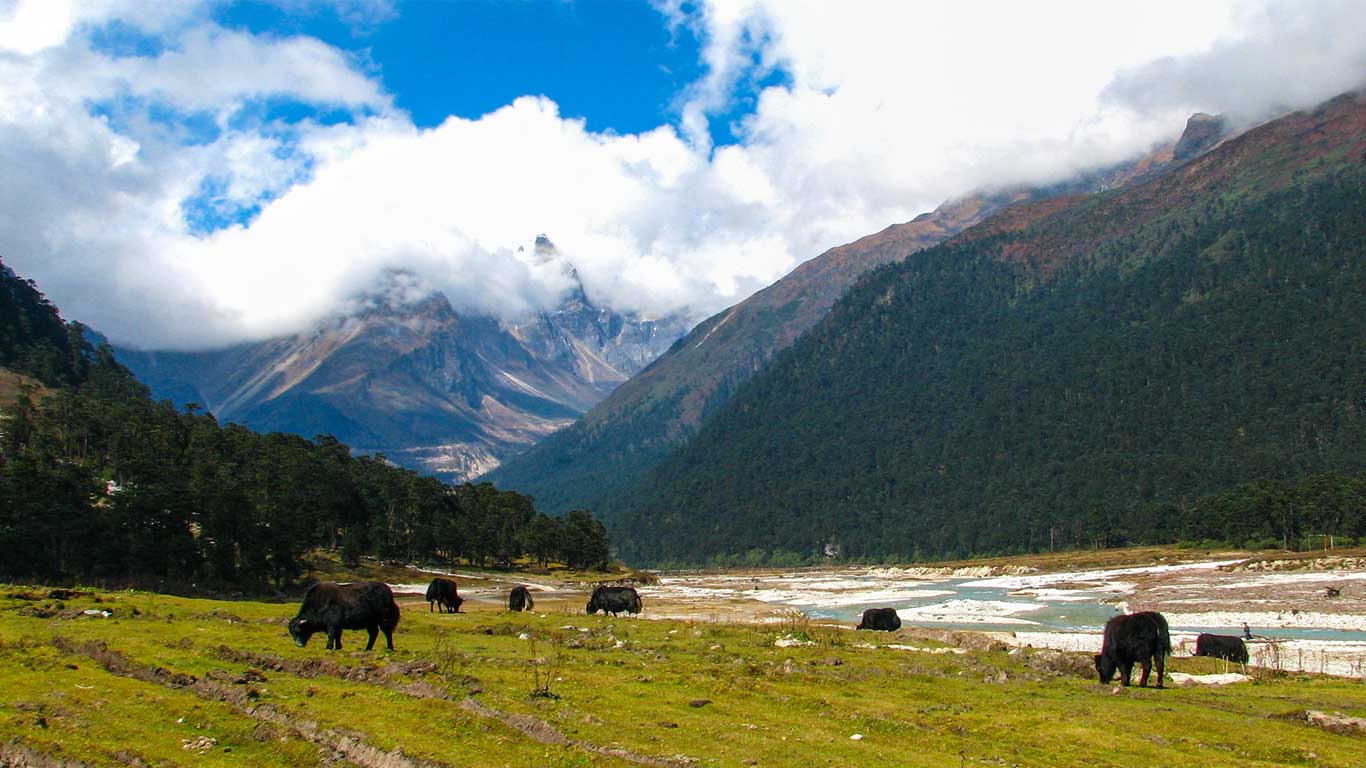
Standing at an altitude of roughly 12,100 feet (3,700 metres), Yumthang is not just another sightseeing spot on a checklist. It is a wide, glacial valley shaped by the Lachung River, surrounded by snow-covered peaks, alpine meadows and dense rhododendron forests. Because access is strictly regulated and accommodation is not allowed inside the valley, Yumthang has managed to retain a fragile, seasonal charm that rewards travellers who plan carefully and travel with experienced operators.
During spring, the valley earns its popular nickname, the Valley of Flowers, when rhododendrons and primulas bloom in layers of red, pink, purple and white. In winter, the same landscape turns stark and white, often buried under heavy snow. Adding to its character are the natural hot springs, rich in sulphur, where warm water bubbles up beside a freezing river, offering a surreal and deeply Himalayan experience.
Understanding Yumthang Valley’s Landscape and Significance
Yumthang sits within a sensitive high-altitude ecosystem shaped by glaciers, rivers and seasonal weather patterns. The Lachung River, which flows through the valley, originates near Tso Lhamo Lake, one of the highest lakes in India. This river eventually meets the Lachen River at Chungthang, forming the Teesta, the lifeline of Sikkim and North Bengal.
Because of its proximity to the Indo-China border, Yumthang remains a restricted area. Travel permits are mandatory, vehicle movement is regulated, and tourism infrastructure is deliberately limited. This makes independent travel complicated and is one of the reasons most visitors rely on organised North Sikkim tour packages rather than attempting self-driven itineraries.
Best Time to Visit Yumthang Valley
Timing matters immensely in Yumthang. The valley looks, feels and behaves very differently depending on the month.
The most popular season runs from late February to mid-June, when roads usually reopen after winter snow and flowers begin to bloom. Between February and April, rhododendrons dominate the landscape, making this the most visually striking period. May and June bring comparatively stable weather, clearer roads and comfortable daytime temperatures, making sightseeing easier.
The second good window is September to November, after the monsoon retreats. During this time, the skies are clearer, the mountain views are sharp, and the valley feels quieter. Flowers are fewer, but the drama of open landscapes and snow-dusted peaks compensates.
The monsoon months of July and August are best avoided. Heavy rainfall, landslides and sudden road closures are common, and permits are often suspended for safety reasons.
Winter, from December to January, is harsh and unpredictable. While Yumthang can sometimes be visited in winter, heavy snowfall frequently blocks the Lachung–Yumthang road, sometimes for weeks. Winter travel should only be attempted with local updates and expert planning.
Local Weather Conditions in Yumthang Valley
Yumthang’s weather is shaped by altitude more than season, and conditions can change within hours.
Spring days are cold in the mornings and evenings, with daytime temperatures remaining pleasant under the sun. Summer brings slightly warmer days, but nights remain cold. Rain can occur at any time, even during peak season. Autumn days are crisp and dry, while winter temperatures drop well below freezing, with strong winds and snowstorms being common.
UV exposure is significantly higher at this altitude, even on cloudy days, making sun protection essential throughout the year.
Yumthang Valley and Gurudongmar Lake – How They Fit Together
Yumthang Valley and Gurudongmar Lake are the two headline destinations of North Sikkim, but they lie in different directions.
From Gangtok, the road up to Chungthang is common for both routes. Beyond Chungthang, the road splits. The left road leads towards Lachen and Gurudongmar Lake, while the right road climbs towards Lachung and Yumthang Valley.
For travellers attempting both, sequencing is important. Gurudongmar sits at a much higher altitude, and most experienced planners recommend visiting Gurudongmar first, followed by Yumthang, to reduce altitude-related discomfort.
It is also important to note that in October 2023, a major glacial lake outburst flood in the Gurudongmar region caused extensive damage to roads and bridges. While repairs are ongoing, road conditions remain variable. Updated local information is essential before committing to itineraries involving Gurudongmar Lake.
Top Sightseeing Experiences Around Yumthang Valley
Shingba Rhododendron Sanctuary
Located near Yumthang, the Shingba Rhododendron Sanctuary spreads across nearly 43 square kilometres, between altitudes of 3,048 and 4,575 metres. It is one of the richest rhododendron habitats in the Eastern Himalayas, with over forty recorded species.
Between April and July, the sanctuary transforms into a natural botanical exhibition. Beyond flowers, the area supports alpine and sub-alpine vegetation, with occasional sightings of musk deer, Himalayan tahr and, for the very lucky, the elusive red panda. The Lachung River flowing through the sanctuary adds to its visual calm.
Lachung River
The Lachung River defines the landscape of the Yumthang and Lachung valleys. Flowing from the high-altitude lakes near the Tibetan plateau, the river cuts through forests, open meadows and villages, shaping some of the most scenic stretches of the journey.
At Chungthang, the Lachung River merges with the Lachen River to form the Teesta, giving the river system both geographical and cultural importance in Sikkim.
Yumesamdong (Zero Point)
Often referred to as Zero Point, Yumesamdong lies around five kilometres beyond Yumthang, at approximately 12,800 feet. It marks the furthest point tourists are usually allowed to travel. The landscape here becomes stark and expansive, with snowfields, frozen streams and uninterrupted mountain views, especially outside peak summer.
Hot Springs of Yumthang Valley
Located near the Yumthang River, these sulphur-rich hot springs offer a rare contrast of steaming water against icy surroundings. While facilities are basic, the experience of soaking feet in warm mineral water at high altitude remains memorable, especially during colder months.
Lachung Monastery
Situated within Lachung village, the Lachung Monastery dates back to the 19th century and belongs to the Nyingma sect of Tibetan Buddhism. Visitors staying overnight in Lachung often find time to walk up to the monastery for a quiet, contemplative break amid their journey.
Getting to Yumthang Valley
The main entry points to Sikkim remain Bagdogra Airport and NJP Railway Station. Pakyong Airport near Gangtok operates limited flights and is weather-dependent.
Yumthang Valley cannot be accessed directly from these points. All travellers must pass through Gangtok, where mandatory permits for North Sikkim are issued. A minimum overnight stay in Gangtok is required both while going and returning.
From Gangtok, the drive to Lachung takes around 5 to 6 hours, covering roughly 115 kilometres, depending on road conditions. Chungthang is the last major settlement en route. From Lachung, Yumthang Valley is about an hour’s drive.
Public transport options are extremely limited, and self-planned travel is complicated by permits, vehicle restrictions and sudden road closures. Most visitors therefore choose organised North Sikkim sightseeing tours.
Where to Stay for Yumthang Valley
There is no accommodation within Yumthang Valley itself. All overnight stays are in Lachung, where a range of hotels, guesthouses and mountain resorts have developed over the years.
Dining options in Lachung are limited, which is why most hotels operate on a full-board basis, including meals along with accommodation. Comfort levels vary, but heating, hot water and basic amenities are usually provided, keeping high-altitude realities in mind.
Permits Required for Yumthang Valley
Because Yumthang lies close to the international border, multiple permits are mandatory.
Indian nationals require an Inner Line Permit, while foreign nationals must obtain a Protected Area Permit. In addition, vehicles need special authorisation, and in most cases, only Sikkim-registered vehicles are allowed beyond certain points.
Given frequent rule changes and weather-related restrictions, permits are best handled through experienced local operators rather than individually.
Packing and Preparation Tips
Packing for Yumthang demands realism rather than optimism. Even during peak summer, temperatures can drop sharply, and snowfall is not uncommon in April and May. Warm layers, waterproof outerwear, gloves and proper footwear are essential.
Rain protection is advisable year-round, as weather changes quickly. Sun protection, including UV-resistant sunglasses and sunscreen, is critical due to high-altitude exposure.
Local Culture, Customs and Responsible Travel
The people of Lachung, known as Lachungpa, follow a traditional self-governed system led by a village head called the Pipan. Visitors generally find locals warm and helpful, but the community values independence and respect.
Littering, smoking in public spaces and damaging natural areas are taken seriously. Sikkim has some of the strongest environmental regulations in India, and visitors are expected to follow them strictly.
Frequently Asked Questions About Yumthang Valley
When is the best month to see flowers in Yumthang Valley?
Late February to April is the prime flowering season, especially for rhododendrons.
Can Yumthang Valley be visited in winter?
It depends on snowfall and road conditions. Access is sometimes possible, but closures are frequent.
Is altitude sickness a concern in Yumthang?
Yes. Proper acclimatisation in Gangtok and gradual ascent are important, especially for travellers coming from the plains.
Can foreign nationals visit Yumthang Valley?
Yes, but only with a Protected Area Permit arranged in advance.
Is independent travel advisable in North Sikkim?
Due to permits, vehicle restrictions and unpredictable conditions, organised tours are strongly recommended.
Plan Your Yumthang Valley Tour with Local Experts
Yumthang Valley rewards travellers who approach it with patience, flexibility and proper planning. From permits and road conditions to hotel selection and sightseeing schedules, experience makes a real difference in North Sikkim.
For well-planned Yumthang Valley tour packages, seamless permits, reliable vehicles and on-ground expertise, connect with NBTT Travel Solution Private Limited (NBTT).
Speak directly with local specialists at +91 9733300696 and plan a journey that respects the mountains while letting you experience them at their best.
East Himalaya
-
Address:NBTT Travel Solution Private Limited, 19, MN Sarkar Road, Sevoke More Siliguri, State : West Bengal, Country : India. PIN : 734001
-
Call Us at:
+91-9733300696 -
Mail Us:
info@east-himalaya.com
