
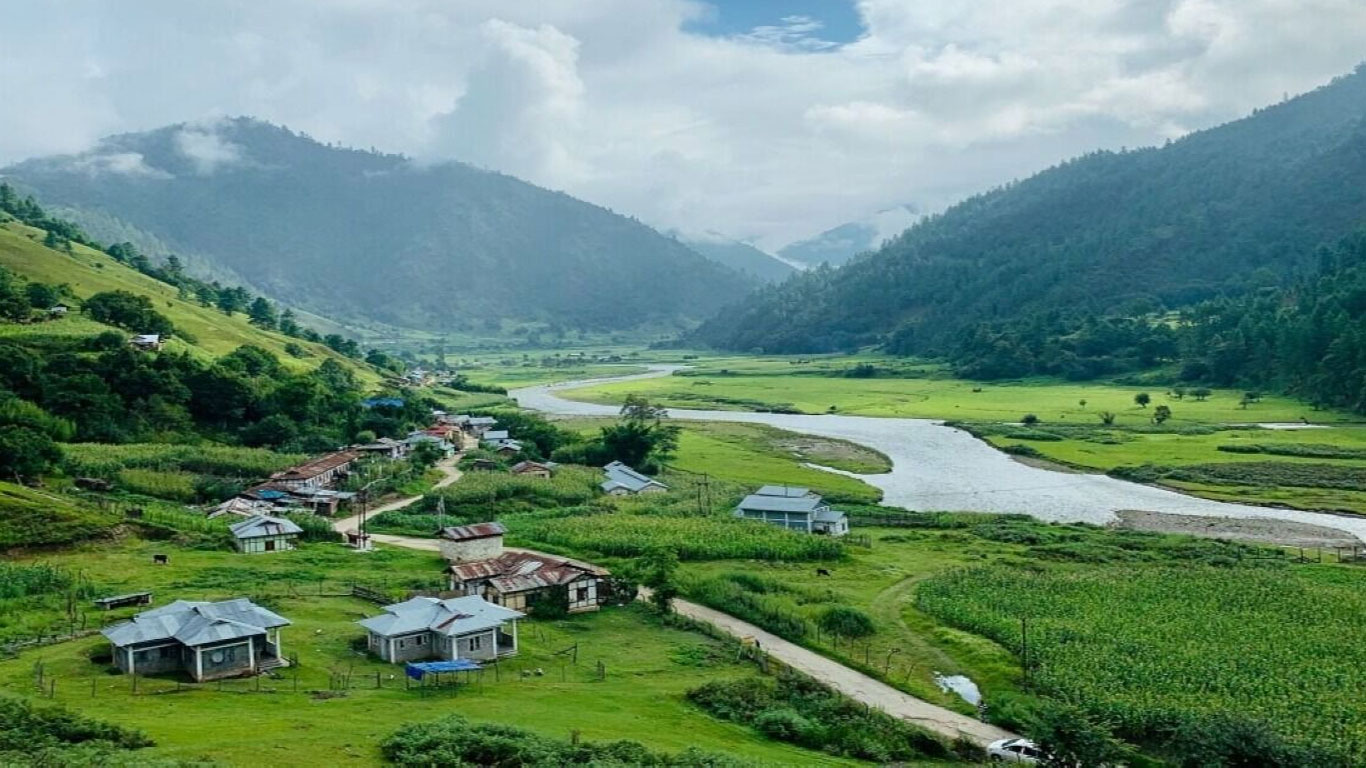

Bhalukpong Travel Guide
Gateway to Arunachal Pradesh and the Beginning of Every Journey into Western Arunachal
For almost every traveller heading towards Bomdila, Dirang, Tawang, Sangti Valley, Shergaon, Mandala Top, or even the remote valleys of western Arunachal Pradesh, one town marks the real beginning of the journey—Bhalukpong.
Located on the border of Assam and Arunachal Pradesh, Bhalukpong is much more than a permit checkpoint or a convenient overnight halt. It is where the plains of Assam gradually give way to the Eastern Himalaya. The climate changes, the forests become denser, the Kameng River begins accompanying the road, and the pace of travel slows as the mountains take over.
Most tourists spend only a few hours here before continuing towards Bomdila or Tawang. That is understandable, but it also means they miss a destination that has its own identity. The forests around Bhalukpong support rich wildlife, the river attracts anglers and rafting enthusiasts, nearby orchid gardens preserve thousands of native species, and two of North East India's finest protected forests—Nameri National Park and Pakke Tiger Reserve—lie within easy reach.
For visitors travelling deeper into Arunachal Pradesh, Bhalukpong also serves a practical purpose. It is the last major settlement where travellers can comfortably withdraw cash, purchase medicines, fuel up, buy warm clothing if required and complete permit formalities before entering the mountains.
Over the past decade, tourism infrastructure has improved steadily. Better roads, improved accommodation and increasing interest in Arunachal Pradesh have encouraged more travellers to spend a night here instead of simply passing through. Doing so allows enough time to explore the surrounding forests, enjoy the river and begin the journey into Arunachal Pradesh without rushing.
Whether your final destination is Tawang, Ziro, Dirang or Mechuka, understanding Bhalukpong helps you appreciate why it continues to be regarded as the traditional gateway to western Arunachal.
This guide combines practical travel advice with local knowledge to help you plan your visit more effectively.
Orientation
Bhalukpong lies at an altitude of around 213 metres above sea level, making it one of the lowest towns in Arunachal Pradesh. Unlike the colder mountain destinations further north, the climate here remains relatively warm throughout much of the year.
The town stands beside the Kameng River, known as the Jia Bharali River while flowing through Assam. Once the river crosses the state boundary into Arunachal Pradesh, it takes the name Kameng, a fact that often confuses first-time visitors.
Geographically, Bhalukpong occupies a strategically important position. It forms the main road entry point into western Arunachal Pradesh and connects Assam with destinations such as Bomdila, Dirang, Tawang, Shergaon, Rupa and Sangti Valley.
The town itself stretches along the highway, with shops, restaurants, hotels, vehicle repair workshops and government offices lining the main road. On the Assam side, commercial activity is noticeably busier, while the Arunachal side gradually becomes quieter as the road enters forested hills.
Because virtually every road journey to western Arunachal passes through Bhalukpong, the town remains active throughout the year. Tourist vehicles, local taxis, army convoys, supply trucks and residents all share the same mountain highway.
Despite this activity, the surrounding forests begin only a short distance away. Within minutes of leaving the town centre, travellers find themselves driving alongside dense woodland and the Kameng River.
Why Bhalukpong is Called the Gateway to Arunachal Pradesh
Every region has a town that serves as its natural entrance. For western Arunachal Pradesh, that town is Bhalukpong.
The principal highway connecting Assam with western Arunachal crosses the state boundary here. Anyone travelling by road towards Bomdila, Dirang, Tawang, Mandala Top, Sangti Valley, Shergaon or Rupa almost inevitably passes through Bhalukpong.
Historically, this route has been important for trade, administration and defence. Even today, supplies destined for many towns in western Arunachal travel through this corridor.
For tourists, Bhalukpong marks an important transition. The broad highways of Assam gradually narrow into mountain roads. The humid plains slowly give way to cooler hill forests. Traffic becomes lighter. Mobile connectivity becomes less predictable. Travel distances begin to be measured in hours rather than kilometres.
Because of these changes, many travellers choose to spend their first night in Bhalukpong before continuing uphill the following morning. This approach also allows time to complete permit formalities, enjoy the nearby attractions and avoid unnecessary fatigue before tackling the longer mountain drive.
A Brief History of Bhalukpong
Although modern Bhalukpong functions primarily as a border town, its history stretches back much further.
Local tradition connects the area with King Bhaluka, whose name is believed to have given rise to "Bhalukpong." According to regional legends, King Bhaluka ruled parts of this region many centuries ago. While historical evidence remains limited, the story continues to form part of local folklore.
The remains of Bhalukpong Fort, situated near the town, are often associated with this history. Archaeological studies suggest that the fort may date back to the medieval Chutia Kingdom, although several local traditions offer differing interpretations of its origin.
For centuries, the forests surrounding Bhalukpong were inhabited primarily by indigenous tribal communities who depended upon agriculture, fishing, hunting and forest resources. During the British period, the route gained greater importance because it connected the Assam plains with the frontier hills.
Following Indian independence and the formation of Arunachal Pradesh, Bhalukpong gradually developed into an administrative and transport hub. Today it remains one of the busiest entry points into the state while continuing to retain its connection with the surrounding forests and rivers.
Geography and Landscape
The landscape around Bhalukpong differs considerably from the higher Himalayan regions further north. Instead of alpine forests and mountain passes, visitors encounter tropical and subtropical forests, broad river valleys and gently rising hills.
The Kameng River dominates the local geography. Originating high in the Eastern Himalaya, the river flows southwards through Arunachal Pradesh before entering Assam, where it becomes the Jia Bharali River and eventually joins the Brahmaputra.
The region forms part of the Eastern Himalayan biodiversity hotspot and serves as an ecological corridor connecting Pakke Tiger Reserve, Nameri National Park and the forests of western Arunachal Pradesh. This geographical location makes Bhalukpong particularly important for birdwatchers, wildlife researchers and conservationists. The area also receives substantial rainfall during the southwest monsoon, contributing to dense vegetation and perennial river systems throughout the region.
Climate
The climate of Bhalukpong differs from that of Bomdila or Tawang because of its much lower elevation. Summers remain warm, with daytime temperatures generally ranging between 22°C and 34°C. Winter is comparatively mild, with temperatures usually varying between 10°C and 22°C.
Heavy rainfall occurs from June to September, when the southwest monsoon influences the entire region. During this period, rivers flow strongly, and occasional landslides may affect roads leading further into Arunachal Pradesh. October marks the beginning of the post-monsoon season. Visibility generally improves, humidity decreases, and road conditions become more predictable.
Winter offers comfortable weather for sightseeing and road journeys, while spring introduces flowering trees and favourable conditions for birdwatching. Because Bhalukpong serves primarily as a transit town, visitors often underestimate how different the weather can become just a few hours further north. Travellers heading towards Dirang or Tawang should always carry warm clothing, even if temperatures in Bhalukpong remain pleasant.
The Permit Check Point at Bhalukpong
One of the most important landmarks in the town is the Inner Line Permit (ILP) Check Post. For most Indian visitors, this is the official entry point into Arunachal Pradesh. After crossing the bridge from Assam, vehicles stop at the security checkpoint where permits are verified before entry into the state. The process is generally straightforward, provided travellers carry valid documentation. Indian citizens are required to possess an Inner Line Permit (ILP) unless exempt under current government regulations.
Foreign nationals must comply with the latest permit requirements prescribed by the Government of India, as these regulations may change from time to time. Travellers should keep both printed and digital copies of their permits, together with a valid government-issued photo identity card. Vehicle documents are occasionally checked, particularly for commercial tourist vehicles.
During holiday periods, the checkpoint may experience queues, so beginning the journey early in the morning is advisable. Many travellers ask whether permits can be obtained directly at Bhalukpong. While online applications have made the process considerably easier, obtaining permits before beginning the journey is still the safest approach, especially during peak tourist seasons.
Professional tour operators such as NBTT generally arrange permits in advance, allowing travellers to cross the checkpoint without unnecessary delays.
Why Spend a Night in Bhalukpong?
Many itineraries simply drive through Bhalukpong on the way to Bomdila. While this is certainly possible, spending a night here offers several practical advantages. It breaks the long drive from Guwahati into manageable sections.
It allows time to visit Nameri National Park, the Tippi Orchid Research Centre, the Kameng River and nearby forest trails. Travellers can complete permit formalities without rushing. Vehicles can be inspected before beginning the mountain drive.
Families with children often find this gradual transition into Arunachal Pradesh far more comfortable than attempting the entire journey in a single day. Photography enthusiasts also appreciate the opportunity to explore the river and forests during the softer morning and evening light. For many travellers, Bhalukpong is no longer just a gateway—it has become an enjoyable destination in its own right.
Major Attractions in and Around Bhalukpong
Bhalukpong is often described as a transit town, but that description barely scratches the surface. Spend a full day here and you quickly realise that the attractions are not concentrated in one place. Instead, they are spread across forests, rivers, orchid gardens, wildlife reserves and small settlements. Some are ideal for a leisurely morning, while others deserve an entire day.
Most travellers heading towards Tawang or Bomdila simply cross the town and continue into the mountains. Those who slow down discover that Bhalukpong introduces many of the experiences that define Arunachal Pradesh—thick forests, mountain rivers, indigenous communities and an extraordinary diversity of wildlife.
Kameng River
No feature shapes Bhalukpong more than the Kameng River. Known as the Jia Bharali River while flowing through Assam, it becomes the Kameng River immediately after entering Arunachal Pradesh. The river originates in the glaciated regions of western Arunachal Pradesh, near the Indo-Tibetan frontier, before flowing through mountain valleys, forests and finally the plains of Assam, where it eventually joins the Brahmaputra.
For visitors, the river is impossible to ignore. The highway follows it for several kilometres, offering repeated glimpses of broad gravel banks, fast-flowing water and forested hills on both sides. The character of the river changes with the seasons.
During winter, the water level drops, exposing wide stretches of rounded boulders and sandy banks. The current remains swift but comparatively gentle in several sections. During the monsoon, the Kameng transforms completely. Rainfall in the upper catchment causes the river to swell dramatically, carrying enormous volumes of water towards Assam. Visitors should avoid entering the river during this period, as currents become extremely strong.
Early mornings are particularly enjoyable beside the river. Residents arrive for fishing, while birds begin moving through the riverside forests. The sound of flowing water accompanies almost every riverside walk. Unlike many Himalayan rivers that remain inaccessible because of steep gorges, several sections around Bhalukpong allow visitors to spend time along the banks safely, provided they exercise normal caution.
Angling for the Golden Mahseer
For decades, the Kameng (Jia Bharali) has been recognised as one of India's finest rivers for Golden Mahseer angling. The Golden Mahseer is regarded by many anglers as one of the world's greatest freshwater game fish because of its size, strength and fighting ability.
Historically, anglers from India and abroad travelled to the Kameng during the fishing season, contributing significantly to local tourism. Today, conservation has become an equally important priority. Catch-and-release angling is increasingly encouraged to protect fish populations, and permits may be required depending on the location and prevailing regulations.
The best fishing season generally extends from November to April, when water levels remain relatively stable. Visitors interested in fishing should always make arrangements through authorised operators familiar with local regulations. NBTT Travel Solution Private Limited can assist with local logistics, permits and transport for anglers planning to explore the Kameng River.
River Rafting on the Kameng
While white-water rafting in Arunachal Pradesh is often associated with the Siang or Subansiri rivers, the Kameng River also offers rewarding rafting experiences. Several stretches near Bhalukpong are suitable for rafting during the winter months when river conditions become safer and more predictable. Depending on water levels, rafting routes include gentle sections suitable for first-time participants as well as more demanding stretches for experienced rafters. Unlike high-altitude rafting expeditions, rafting here combines forest landscapes with broad river valleys, allowing participants to observe birds and riverside vegetation throughout the journey.
Safety equipment and experienced guides are essential, and activities should only be organised through recognised operators.
Nameri National Park
Among the attractions surrounding Bhalukpong, Nameri National Park is undoubtedly one of the most significant. Although the park officially lies in Assam, its proximity makes it one of the principal reasons many travellers choose to spend a night in Bhalukpong.
Covering approximately 200 square kilometres, Nameri forms part of a much larger protected landscape that includes Pakke Tiger Reserve across the state boundary in Arunachal Pradesh. Together, these forests create an uninterrupted wildlife corridor extending deep into the Eastern Himalaya. Unlike many Indian national parks where visitors undertake jeep safaris, Nameri offers a different experience. Exploration here focuses on guided forest walks accompanied by trained naturalists and forest guards.
Walking quietly through the forest allows visitors to appreciate birds, butterflies, insects, giant trees and animal tracks rather than simply searching for large mammals. Although tigers, elephants, leopards and clouded leopards inhabit the park, sightings remain relatively uncommon because of the dense vegetation. For many visitors, the appeal lies in experiencing an intact forest ecosystem rather than chasing a checklist of wildlife.
Birdwatching in Nameri National Park
Nameri enjoys an international reputation among birdwatchers. More than 370 bird species have been recorded within the park and surrounding forests.
Some of the better-known species include: Great Hornbill, Wreathed Hornbill, Oriental Pied Hornbill, White-winged Duck, Ibisbill, Ruddy Kingfisher, Pallas's Fish Eagle, Great Slaty Woodpecker, Black Stork, numerous species of barbets, drongos, flycatchers, minivets and babblers.
The forests around Bhalukpong therefore attract professional bird photographers as well as enthusiastic amateurs. The most productive hours for birdwatching are usually shortly after sunrise and during the late afternoon. Winter, particularly from November to March, offers excellent opportunities because resident birds remain active while migratory species also arrive in the region.
Forest Walks in Nameri
Unlike conventional safaris, guided walks form one of Nameri's defining experiences. Accompanied by trained guides, visitors follow forest trails through semi-evergreen woodland, grasslands and riverine habitats. These walks encourage observation rather than speed.
Animal tracks, bird calls, butterflies, medicinal plants and towering forest trees become part of the experience. Because walking groups remain relatively small, the forest feels remarkably quiet despite being close to the highway. Many visitors later describe these guided walks as one of the highlights of their journey through North East India.
Tippi Village
Just a few kilometres before Bhalukpong lies Tippi Village, known throughout Arunachal Pradesh for its celebrated orchid research centre.
The village itself is small, but its contribution to orchid conservation is nationally significant.
The surrounding forests of Arunachal Pradesh contain one of the richest orchid populations in India, and Tippi serves as an important centre for studying, conserving and propagating these remarkable plants.
For travellers, Tippi offers an easy and rewarding stopover between Tezpur and Bhalukpong.
Tippi Orchid Research Centre
The Orchid Research Centre at Tippi was established by the Department of Environment and Forests, Government of Arunachal Pradesh. Today it remains one of India's most important orchid conservation facilities. The centre maintains thousands of orchid specimens representing hundreds of species collected from different parts of Arunachal Pradesh.
Visitors can explore: glasshouses displaying flowering orchids, Research facilities, and an orchidarium containing both common and rare species.
Seasonal flowering patterns vary throughout the year. Although orchids may be seen during most months, March to May generally offers the richest displays. Even visitors with little previous interest in orchids often leave with a greater appreciation of the remarkable diversity found in Arunachal Pradesh.
Pakke Tiger Reserve
Across the Kameng River lies another of North East India's important protected forests—Pakke Tiger Reserve, also known as Pakhui Tiger Reserve. Covering more than 860 square kilometres, Pakke protects tropical evergreen and semi-evergreen forests that support exceptional biodiversity. The reserve is recognised nationally for its successful conservation of hornbills and elephants.
Wildlife recorded within Pakke includes: Bengal Tiger, Indian Leopard, Clouded Leopard, Asian Elephant, Gaur, Wild Dog, Barking Deer, Sambar, Himalayan Black Bear and several other species of primates.
The reserve has also become internationally recognised for community-based conservation programmes involving local Nyishi communities. Entry into core areas requires permission and is generally organised through authorised operators.
Hornbill Conservation
Pakke Tiger Reserve has become an important centre for hornbill conservation. The forests support four species of hornbills, including Great Hornbill, Wreathed Hornbill, Oriental Pied Hornbill, and Rufous-necked Hornbill. The famous Hornbill Nest Adoption Programme, initiated in partnership with local communities, has received international recognition for protecting nesting sites while providing sustainable income to nearby villages.
Visitors interested in conservation often find this programme one of the most inspiring examples of community participation in wildlife protection.
Bhalukpong Fort
Although relatively modest compared with larger historical monuments, the remains of Bhalukpong Fort provide an interesting glimpse into the region's past. The fort is believed to date back several centuries and is traditionally associated with King Bhaluka, although historians also connect it with the medieval Chutia Kingdom.
Only portions of the original structure remain today. Visitors generally spend a short time exploring the site while learning about the legends surrounding its history.
Butterfly Watching
The warm climate and surrounding forests make Bhalukpong one of Arunachal Pradesh's rewarding destinations for butterfly enthusiasts. Numerous species inhabit the forests bordering Nameri and Pakke.
Spring and post-monsoon months generally provide the best opportunities for butterfly photography. Early mornings, when butterflies become active after sunrise, are particularly productive.
Photography Around Bhalukpong
Photographers often arrive expecting only a transit town but quickly discover an impressive variety of subjects. The Kameng River changes character throughout the day as light shifts across the valley. Morning mist occasionally hangs above the river during winter.
Forest trails offer opportunities to photograph orchids, fungi, butterflies and birds. Traditional bamboo houses, suspension bridges, fishing activities and roadside markets provide interesting glimpses of everyday life. During the flowering season, Tippi becomes one of the region's finest locations for botanical photography. Long-exposure photography beside the Kameng River is particularly rewarding during winter when water levels are lower and access to the riverbanks becomes easier.
How Much Time Should You Spend in Bhalukpong?
If your itinerary only allows a brief stop, you can continue directly towards Bomdila after completing permit formalities. However, travellers who can spare one night generally enjoy a much richer experience. A full day allows enough time to visit Nameri National Park, Tippi Orchid Research Centre, the Kameng River, and nearby forest areas without rushing.
Birdwatchers, anglers and wildlife photographers frequently extend their stay further before beginning the drive into the higher Himalaya. For many visitors, Bhalukpong becomes far more than a gateway—it becomes the first real introduction to the landscapes, forests and wildlife that make Arunachal Pradesh one of India's most rewarding travel regions.
Local Culture and Festivals
Although many travellers think of Bhalukpong simply as the entry point to Arunachal Pradesh, the town has a distinct cultural identity shaped by its location on the border between Assam and Arunachal Pradesh. Communities from both states have lived, traded and travelled through this region for generations, creating a cultural landscape that differs from both the Assamese plains and the higher Himalayan districts.
The indigenous communities of western Arunachal Pradesh maintain close social and economic ties with Bhalukpong. Local markets, schools, government offices and businesses bring together people from different tribes, making the town one of the most culturally diverse places in the region.
Unlike larger tourist destinations where cultural performances are organised for visitors, traditions in Bhalukpong remain closely linked to everyday life. Festivals continue to be celebrated within villages and communities rather than as commercial events. Visitors who happen to travel during these celebrations often gain a more meaningful understanding of local customs.
Music, dance and oral storytelling continue to occupy an important place in tribal society. Traditional instruments made from bamboo, wood and animal hide are still used during festivals and ceremonial occasions. Songs often recount stories of ancestors, agriculture, hunting, local legends and the relationship between people and the forests.
Handicrafts also remain an important cultural expression. Bamboo baskets, cane products, woven textiles and traditional ornaments continue to be made using techniques that have been passed from one generation to another.
The Nyishi Community
The principal indigenous community around Bhalukpong is the Nyishi Tribe, one of the largest tribal groups in Arunachal Pradesh. For centuries, the Nyishi people have lived across large parts of western and central Arunachal Pradesh, adapting to different geographical conditions ranging from river valleys to mountain forests. Agriculture remains an important occupation, although education, tourism, government service and business have become increasingly significant sources of livelihood.
Traditional Nyishi houses were constructed almost entirely from bamboo, timber and locally available materials. Although modern buildings have become more common in towns such as Bhalukpong, many villages continue to preserve traditional construction techniques. Visitors may notice traditional woven hats, bead necklaces and bamboo handicrafts that continue to be worn or produced during festivals and special occasions.
The Nyishi community has also played an important role in wildlife conservation, particularly through initiatives associated with Pakke Tiger Reserve. Community participation has helped protect hornbill nesting sites and encouraged sustainable conservation practices that benefit both wildlife and residents.
Demography and Languages
Bhalukpong is home to a mixed population. Apart from the Nyishi community, residents include Assamese families, government employees, business owners and people from several other tribal communities of Arunachal Pradesh. This diversity makes communication relatively easy for visitors.
The commonly spoken languages include: Nyishi, spoken within the indigenous community. Hindi, widely understood throughout the town. Assamese, commonly spoken because of the town's proximity to Assam. English, used in schools, hotels, government offices and tourism-related businesses. Visitors rarely encounter language barriers, as Hindi serves as the common language for communication across different communities.
Food in Bhalukpong
Food in Bhalukpong reflects influences from both Assam and Arunachal Pradesh. Restaurants in the town generally serve North Indian, Assamese and simple Chinese dishes alongside local tribal cuisine. Rice remains the staple food, accompanied by seasonal vegetables, dal, fish, chicken or pork. Visitors interested in local food should try preparations that make use of bamboo shoots, fermented soybean, wild leafy vegetables and mountain herbs. Smoked pork remains one of the better-known dishes among many tribal communities of Arunachal Pradesh.
Fresh river fish is also available during much of the year, depending on seasonal availability. Unlike heavily spiced cuisine found elsewhere in India, local cooking often relies on simple preparation methods that allow the natural flavour of ingredients to remain prominent. Tea occupies an important place in everyday life. Small roadside tea stalls become gathering places where travellers, drivers and residents exchange news before continuing their journeys.
Because Bhalukpong serves as the main gateway into western Arunachal, restaurants also cater to travellers beginning long mountain drives. Breakfast is usually available early in the morning, allowing visitors to depart before sunrise if required.
Shopping in Bhalukpong
Although Bhalukpong is not a shopping destination in the conventional sense, visitors can still find interesting local products. Small markets sell bamboo handicrafts, cane baskets, woven bags, traditional hats and locally produced honey. Seasonal agricultural products such as oranges, ginger, turmeric and chillies are available depending on the time of year. Many travellers also purchase locally woven shawls and handmade bamboo articles before continuing deeper into Arunachal Pradesh.
Buying directly from local artisans supports traditional craftsmanship and provides income to rural communities. Bhalukpong is also the final convenient place to purchase medicines, packaged food, toiletries, batteries and other travel essentials before entering the higher Himalayan districts where shopping options become much more limited.
Best Time to Visit Bhalukpong
Choosing the Best time to visit Bhalukpong depends upon your itinerary and the destinations you intend to visit afterwards.
For most travellers, the period between October and April offers the most favourable conditions. October follows the withdrawal of the monsoon. Rivers remain full, forests appear fresh after months of rainfall, and road conditions usually improve considerably. November is among the most comfortable months for sightseeing. Humidity decreases, visibility improves, and temperatures remain pleasant throughout the day. From December to February, mornings become cool while afternoons remain comfortable. These months are ideal for travellers beginning longer journeys towards Bomdila, Dirang and Tawang, where winter conditions become much colder. March and April bring warmer temperatures along with flowering trees and orchids. Birdwatching in nearby forests also becomes particularly rewarding during spring.
The period from June to September receives heavy monsoon rainfall. Although the forests become greener, road conditions may occasionally be affected by landslides, especially beyond Bhalukpong towards Bomdila and Tawang. For visitors planning wildlife excursions to Nameri National Park or Pakke Tiger Reserve, winter and early spring generally provide the best opportunities. Overall, the Best time to visit Bhalukpong is considered to be October to April, especially for travellers continuing towards western Arunachal Pradesh.
Bhalukpong Hotels
Accommodation in Bhalukpong hotels has improved steadily over recent years. While the town does not offer luxury resorts, visitors can choose from a range of budget and mid-range properties suitable for overnight stays. Most hotels provide comfortable rooms, attached bathrooms, hot water, parking facilities and restaurants serving Indian meals.
Several properties cater specifically to travellers beginning early morning journeys towards Bomdila or Tawang and therefore offer breakfast from early hours. Because Bhalukpong serves primarily as a transit destination, accommodation standards are practical rather than elaborate.
Travellers planning to visit during Christmas, New Year, long weekends or the winter tourist season should reserve Bhalukpong hotels in advance, as availability can become limited.
Bhalukpong Homestay
Choosing a Bhalukpong homestay provides a different experience from staying in a conventional hotel. Family-operated homestays allow visitors to interact with residents, enjoy home-cooked meals and experience everyday life in the region.
Rooms are generally simple, clean and comfortable. Meals often feature locally grown vegetables, rice, bamboo shoots and traditional recipes prepared by the host family. Many travellers appreciate the quieter atmosphere offered by a Bhalukpong homestay, particularly those interested in birdwatching, photography or spending additional time exploring nearby forests. As tourism continues to grow, the number of quality homestays around Bhalukpong is gradually increasing.
Booking remains advisable during the peak tourist season.
Getting There
One of the biggest advantages of Bhalukpong is its excellent connectivity. Unlike many destinations in Arunachal Pradesh that require long mountain drives from the nearest airport or railway station, Bhalukpong is relatively easy to reach from Assam. It serves as the principal road gateway into western Arunachal Pradesh and is the starting point for journeys towards Bomdila, Dirang, Tawang, Shergaon, Rupa, Sangti Valley and several other destinations.
Most visitors arrive in Bhalukpong from Guwahati, although some begin their journey from Tezpur or Rangapara. The road remains operational throughout the year, though travel times may increase during the monsoon because of heavy rainfall and road maintenance.
For travellers planning a longer holiday in Arunachal Pradesh, Bhalukpong is usually the first overnight halt before ascending into the higher Himalayan regions.
By Air
The nearest airport is Tezpur Airport (Salonibari Airport), approximately 55 kilometres from Bhalukpong. Although commercial services operate periodically, flight availability remains limited. Most visitors therefore choose to fly into Lokpriya Gopinath Bordoloi International Airport, Guwahati, which offers frequent flights from Kolkata, Delhi, Mumbai, Bengaluru, Chennai and several other Indian cities. The drive from Guwahati Airport to Bhalukpong generally takes five to six hours, depending on traffic and weather conditions.
NBTT Travel Solution Private Limited regularly arranges airport pickups for travellers beginning their Arunachal Pradesh holidays.
By Rail
Travellers arriving by train usually use one of the following railway stations: Rangapara North Junction, approximately 70 kilometres away. Tezpur Railway Station, where available services operate. Guwahati Railway Station, offering the widest range of long-distance train connections from across India. From these railway stations, taxis and private vehicles are the preferred mode of transport to Bhalukpong.
By Road
The road journey from Guwahati to Bhalukpong is comfortable and passes through several towns of Assam before reaching the Arunachal border.
The commonly followed route is: Guwahati → Mangaldoi → Tezpur → Bhalukpong. The total distance is approximately 240–250 kilometres, depending upon the exact starting point. Road conditions are generally good, making this one of the smoother highway journeys in North East India. Many visitors prefer leaving Guwahati early in the morning to reach Bhalukpong before lunch, allowing time to visit nearby attractions on the same day.
Guwahati to Bhalukpong Taxi
Booking a Guwahati to Bhalukpong taxi remains the most convenient way of beginning a holiday in Arunachal Pradesh.
Private taxis offer several advantages over public transport. Travellers can stop at Tezpur for refreshments, visit roadside viewpoints, explore Tippi Orchid Research Centre and arrive at Bhalukpong according to their own schedule.
Vehicle options generally include: Sedans for two travellers. SUVs for families. Toyota Innova Crysta for small groups.Tempo Travellers for larger parties. Professional drivers familiar with the Arunachal route also provide valuable local knowledge regarding road conditions, weather and permit procedures.
For travellers continuing to Bomdila or Tawang, booking a Guwahati to Bhalukpong taxi as part of a longer itinerary often proves more economical than arranging transport separately. If you are looking for a tourist vehicle for your tour of Western Arunachal Pradesh, feel free to contact our transport team at NBTT, and we will arrange a vehicle for you.
Bhalukpong Car Rental
Many visitors choose Bhalukpong car rental services after reaching the town, particularly those arriving independently by train or bus. Hiring a dedicated vehicle provides greater flexibility while travelling through western Arunachal Pradesh. Experienced mountain drivers understand steep gradients, changing weather conditions and the occasional road diversions caused by maintenance work. SUVs remain the preferred choice because they are well suited to mountain roads leading towards Bomdila, Dirang and Tawang.
Booking a Bhalukpong car rental in advance is recommended during the winter tourist season and major holidays when demand is high.
Frequently Asked Questions
Where is Bhalukpong located?
Bhalukpong lies on the border between Assam and Arunachal Pradesh and serves as the principal road gateway into western Arunachal.
Why is Bhalukpong famous?
It is known for the Permit Check Point at Bhalukpong, the Kameng River, Nameri National Park, Tippi Orchid Research Centre and as the starting point for journeys to Tawang.
Is an Inner Line Permit required?
Yes. Indian citizens generally require an Inner Line Permit before entering Arunachal Pradesh.
Can permits be obtained online?
Yes. Online ILP applications have made the process much easier. Applying before travelling is recommended.
What is the Best time to visit Bhalukpong?
The Best time to visit Bhalukpong is generally from October to April, when weather conditions are most favourable for sightseeing and onward travel.
How many days should I stay?
One night is sufficient for a transit stop, while two nights allow time to explore nearby forests and wildlife attractions.
Are there good Bhalukpong hotels?
Yes. Several comfortable Bhalukpong hotels provide clean accommodation suitable for overnight stays before continuing into Arunachal Pradesh.
Can I stay in a Bhalukpong homestay?
Yes. Choosing a Bhalukpong homestay offers opportunities to experience local hospitality and home-cooked food.
Is Bhalukpong suitable for families?
Yes. The town is an excellent overnight halt for families travelling towards Tawang or Bomdila.
Is rafting available?
Seasonal rafting is organised on the Kameng River depending upon water levels and weather.
Can I visit Nameri National Park from Bhalukpong?
Yes. The park is only a short drive away and is one of the most popular excursions from Bhalukpong.
What wildlife can I see?
The surrounding forests support elephants, hornbills, leopards, deer, primates and hundreds of bird species, although sightings depend upon season and luck.
Is self-driving recommended?
Experienced drivers can undertake self-drive journeys, but hiring local drivers is generally more comfortable for mountain routes.
How far is Tawang from Bhalukpong?
Tawang is approximately 280 kilometres away. Depending on road conditions and planned stops, the journey usually takes two days with overnight halts at Bomdila or Dirang.
Explore Arunachal Pradesh with NBTT Travel Solution Private Limited
Planning a journey through Arunachal Pradesh involves much more than booking hotels. Permits, transport, road conditions, accommodation and seasonal weather all require careful coordination.
With over two decades of experience in organising holidays across the Eastern Himalaya, NBTT Travel Solution Private Limited offers complete travel solutions for individuals, families, photographers, birdwatchers and small groups.
Our services include: Bhalukpong tour package tailored to your travel style. Arunachal tour package via Bhalukpong covering Bomdila, Dirang and Tawang. Arunachal Pradesh Tour Package customised for different durations and interests. Tawang Tour Package with experienced mountain drivers. Guwahati to Bhalukpong taxi and airport transfers. Bhalukpong car rental and reliable SUVs for mountain travel. Car hire for Tawang with professional drivers familiar with Himalayan roads. Hotel bookings, Bhalukpong hotels, Bhalukpong homestay arrangements and permit assistance. Birdwatching, wildlife, photography and cultural tours across Arunachal Pradesh.
Every itinerary is customised rather than following a fixed template, ensuring your journey matches your interests, available time and travel preferences.
Contact NBTT Travel Solution Private Limited
Planning a holiday to Bhalukpong, Tawang or anywhere in Arunachal Pradesh?
Call or WhatsApp: +91 9733300696
Our travel specialists will help you plan the right itinerary, arrange permits, recommend accommodation and organise dependable transport throughout your journey.
NBTT Travel Solution Private Limited
The Soul of Eastern Himalaya
East Himalaya
-
Address:NBTT Travel Solution Private Limited, 19, MN Sarkar Road, Sevoke More Siliguri, State : West Bengal, Country : India. PIN : 734001
-
Call Us at:
+91-9733300696 -
Mail Us:
info@east-himalaya.com
