

Mechuka Travel Guide
Orientation
Far in the Shi-Yomi district of Arunachal Pradesh lies Mechuka, also written as Menchuka, a mountain valley that remains one of the least commercialised destinations in India's north-east. Around 29–30 kilometres from the Indo-Tibet (China) border, Mechuka combines a fascinating frontier history with Buddhist heritage, tribal traditions and dramatic Himalayan geography. Although tourism has increased over the last few years, the valley still retains a quiet rhythm of life where farming, animal husbandry, monasteries and village communities shape everyday living.
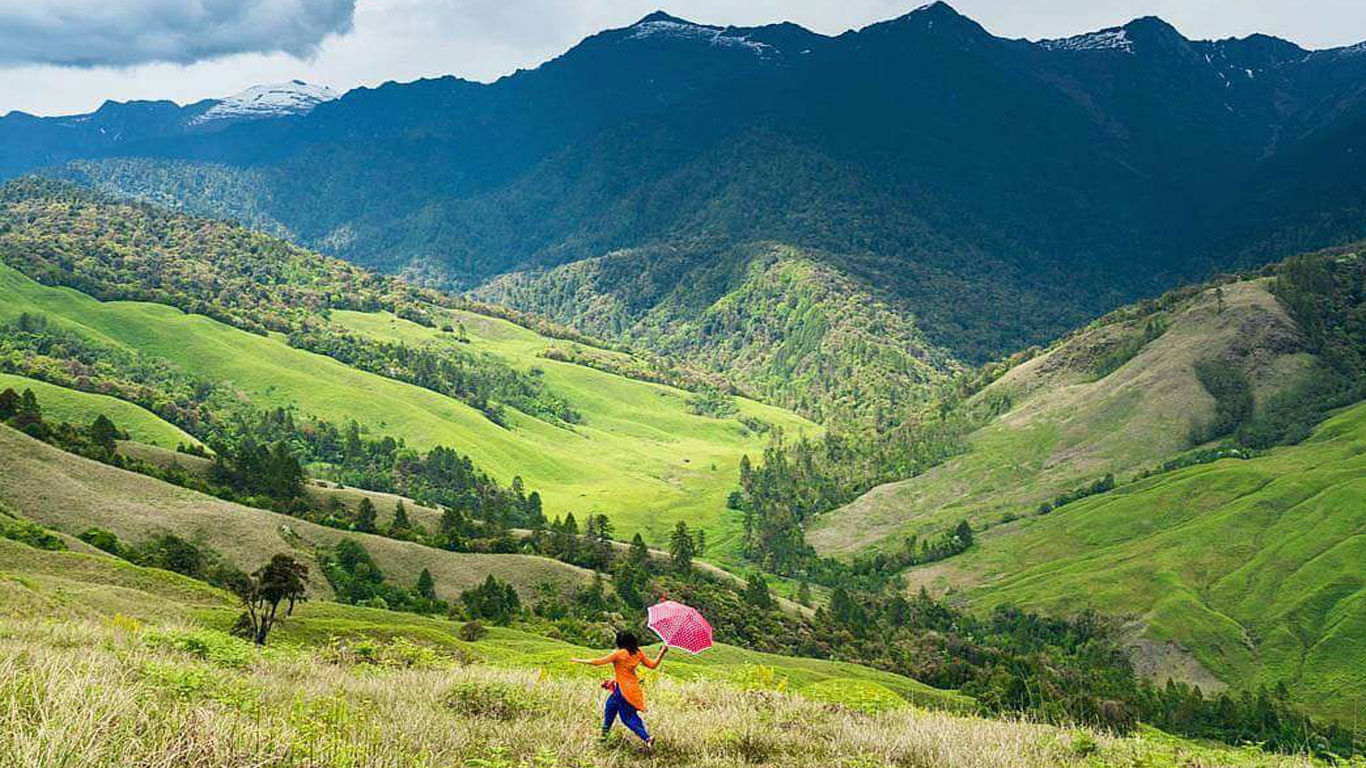
Standing at an elevation of approximately 1,250 metres above sea level, Mechuka occupies a broad river valley carved by the Yargyap Chu, locally known as the Siyom River. Unlike many Himalayan hill stations that cling to steep slopes, Mechuka spreads across relatively flat terrain surrounded by mountain ranges. This geography makes it pleasant to explore on foot while offering uninterrupted views of forests, rivers, grasslands and distant peaks.
The valley serves as the headquarters of the Mechuka Sub-Division in Shi-Yomi district. Until 2018, the area formed part of the larger West Siang district before administrative reorganisation created Shi-Yomi as a separate district. This change has gradually improved governance, tourism planning and infrastructure, although Mechuka continues to retain its frontier character.
The name Mechuka is believed to originate from three local words—"Men" meaning medicinal, "Chu" meaning water and "Kha" meaning snow. Together they are interpreted as "medicinal water from snow." Local folklore associates the valley's streams and springs with healing qualities, an idea that reflects the area's close relationship with its natural environment.
Historically, Mechuka remained isolated from the rest of India for centuries. Trade and cultural exchanges were far stronger with neighbouring Tibet than with the plains of Assam. Ancient foot trails connected traders, monks and villagers across the mountains long before modern roads appeared. Even today, Tibetan influences remain visible in architecture, religion, dress and cuisine, particularly among the Memba community.
For travellers planning an Arunachal Pradesh Tour Package, Mechuka has increasingly become an important destination along with Tawang, Ziro, Dirang and Anini. Unlike these better-known places, however, Mechuka receives comparatively fewer visitors, allowing travellers to spend time in villages, monasteries and open landscapes without heavy tourist crowds.
The valley appeals to people interested in Himalayan culture, history, photography, birdlife, village experiences, overland road journeys and border tourism. It is equally suitable for families, solo travellers, motorcyclists and photographers, provided they are comfortable with long road journeys and basic mountain infrastructure.
History of Mechuka
The recorded history of Mechuka is closely connected with the movement of Tibetan Buddhist communities into the Eastern Himalayas. The valley has long been inhabited by the Memba, Adi, Tagin and several smaller indigenous communities whose traditions evolved through centuries of interaction with Tibet and neighbouring tribal regions.
Long before British India reached these mountains, Mechuka functioned as an important cultural corridor. Traders transported salt, wool, medicinal herbs, animal products and handcrafted goods across mountain passes linking Tibet with present-day Arunachal Pradesh. These trade routes also facilitated the spread of Mahayana Buddhism into the valley, leading to the establishment of monasteries that continue to function today.
One of the most significant historical landmarks is the Samten Yongcha Monastery, believed to have been founded nearly four centuries ago. The monastery became an important religious institution for the Memba people and remains central to their spiritual life.
The valley acquired strategic importance after India's independence because of its proximity to the international border. During the 1962 Indo-China War, Mechuka witnessed military activity owing to its location near frontier areas. The Indian Army and Indian Air Force subsequently strengthened their presence, and even today defence establishments form an important part of the local economy.
The airstrip at Mechuka, originally developed for defence purposes, continues to play a strategic role. Although primarily a military facility, limited civilian helicopter services have periodically connected the valley with other parts of Arunachal Pradesh depending on operational schedules and weather conditions.
Over the last decade, improved roads, wider mobile connectivity and growing interest in north-east India have gradually brought Mechuka into mainstream tourism. At the same time, the local administration has encouraged sustainable tourism so that economic development does not disturb traditional village life.
Geography and Climate
Mechuka lies within the upper basin of the Siyom River, one of the important tributaries of the Brahmaputra. The river originates in Tibet before flowing into Arunachal Pradesh and eventually joining the Siang River further south.
The valley floor is surrounded by mountains that rise well above 4,000 metres. These higher elevations receive regular snowfall during winter, while the town itself experiences cool winters and pleasant summers because of its relatively moderate altitude.
Unlike many Himalayan destinations that consist almost entirely of steep slopes, Mechuka contains extensive grasslands and river terraces. These open areas support agriculture, grazing and village settlements. Fields of buckwheat, millet, maize and vegetables can be seen during the growing season, while yaks, mithuns and cattle graze in surrounding pastures.
Dense forests cover the surrounding mountains and include pine, oak, rhododendron, bamboo and numerous Himalayan plant species. The region also supports rich biodiversity, including pheasants, hornbills, eagles and many migratory birds. Birdwatchers often spend several days exploring the forests around Mechuka because different elevations support different species throughout the year.
Temperatures vary considerably across seasons. Winter mornings frequently fall below freezing, although daytime temperatures generally remain comfortable under clear skies. Spring introduces flowering trees and renewed agricultural activity. Summer remains comparatively mild, especially when compared with the plains of Assam. The monsoon arrives between June and September, bringing heavy rainfall that can occasionally affect road connectivity because of landslides.
The climate changes rapidly in mountain regions, and visitors should carry layered clothing throughout the year. Even during summer evenings, temperatures can become surprisingly cool.
Getting There
Travelling to Mechuka requires planning, but the journey forms one of the highlights of the experience. Roads pass through river valleys, forests, suspension bridges and tribal settlements, offering a gradual introduction to the landscapes of western Arunachal Pradesh.
Mechuka possesses an Advanced Landing Ground (ALG) developed by the Indian Air Force. This airstrip is primarily used for defence operations and does not currently operate regular commercial airline services.
From time to time, the Government of Arunachal Pradesh operates Pawan Hans helicopter services linking Mechuka with towns such as Itanagar, Pasighat and Aalo. These schedules may change depending on operational requirements, weather conditions and government policy. Travellers intending to use helicopter services should confirm schedules well in advance.
For most visitors, the nearest commercial airports are:
Dibrugarh Airport (Assam): Approximately 440–470 kilometres depending on the chosen route. This is the preferred airport for most travellers because it offers frequent flights from Kolkata, Guwahati, Delhi and other major Indian cities.
Lilabari Airport (North Lakhimpur): Suitable for travellers approaching from eastern Assam, though flight options are comparatively limited.
Itanagar (Hollongi Airport): Can also be used if travellers wish to combine Mechuka with a longer Arunachal Pradesh circuit.
The nearest major railway station is Dibrugarh, which enjoys direct rail connectivity with Guwahati, Kolkata, New Delhi and several important Indian cities.
Other stations such as Tinsukia, Murkongselek and North Lakhimpur may also be used depending on the travel itinerary, although Dibrugarh remains the most convenient option for most tourists.
Road travel remains the principal way of reaching Mechuka. Although distances may not appear excessive on maps, mountain roads require considerably more travel time than highways in the plains.
Approximate driving distances are:
Aalo (Along) to Mechuka: Around 186 kilometres, generally taking 6 to 7 hours depending on road conditions.
Pasighat to Mechuka: Approximately 290 kilometres, requiring 9 to 10 hours.
Dibrugarh to Mechuka: Around 440 to 470 kilometres, normally completed over two days, with an overnight halt at Aalo being the most comfortable option.
Road conditions continue to improve every year through projects undertaken by the Border Roads Organisation and state agencies. Nevertheless, landslides, temporary repairs and weather conditions can affect travel times, particularly during the monsoon.
Visitors planning a self-drive holiday should note that fuel stations become increasingly scarce after Aalo. It is advisable to begin the journey with a full tank and avoid late evening driving.
For visitors unfamiliar with mountain roads, booking a Mechuka taxi through an experienced operator remains the most comfortable option. Professional drivers are familiar with local road conditions, permit checkpoints and seasonal diversions.
Many travellers include Mechuka as part of a longer Arunachal Pradesh Tour Package, covering destinations such as Pasighat, Aalo, Ziro, Daporijo or Along, making road travel the most practical choice.
Permits Required
Like most protected regions of Arunachal Pradesh, Mechuka requires visitors to obtain the necessary permits before arrival.
Indian citizens must carry an Inner Line Permit (ILP). The permit can be obtained online through the Arunachal Pradesh Government portal or from designated offices in Guwahati, Kolkata, New Delhi and several other cities. Travellers should carry both printed and digital copies throughout the journey, as permit verification is conducted at multiple checkpoints.
Foreign nationals require a Protected Area Permit (PAP) or any updated permit prescribed by the Government of India and the Government of Arunachal Pradesh. Regulations may change periodically, so travellers should verify the latest requirements before planning their trip.
Permit regulations are designed to manage travel in sensitive border areas and should be respected at all times. Photography may also be restricted near military installations and border infrastructure.
Travellers booking a Mechuka tour package through an experienced operator generally receive assistance with permit formalities, route planning and documentation, making the journey considerably more convenient.
Local People, Demography and Languages
Despite its remote location, Mechuka presents an interesting mix of ethnic communities whose traditions have shaped the valley for centuries.
The Memba community forms one of the principal populations of Mechuka. They follow Tibetan Buddhism and maintain close cultural links with Tibetan traditions through language, festivals, architecture and monasteries. Prayer flags, prayer wheels and traditional wooden houses remain common features across Memba villages.
The Adi community, one of Arunachal Pradesh's largest indigenous groups, also resides in and around Mechuka. Their customs, agricultural practices and festivals differ from those of the Memba people, adding considerable cultural diversity to the valley.
Other communities, including Tagin, Bokar, government employees, defence personnel and settlers from different parts of India contribute to the town's social fabric.
The population remains relatively small, creating a close-knit community where people know one another well. Agriculture, animal husbandry, government services, defence establishments and tourism provide the principal sources of livelihood.
Several languages are spoken in daily life. Memba, Adi and Hindi are widely understood, while English is commonly used in schools, government offices and tourism-related establishments. Visitors generally face no communication difficulties, particularly in the town centre.
Education standards have steadily improved over the years, and younger residents often pursue higher education in Itanagar, Guwahati and other Indian cities before returning to contribute to local administration, education and tourism.
One of the most noticeable aspects of travelling through Mechuka is the warmth with which visitors are received. Local communities value respectful interaction, and travellers who show genuine interest in village life, customs and traditions often find themselves invited into homes for tea, local food or conversation. This sense of community remains one of Mechuka's defining characteristics and forms an important part of the travel experience.
Major Attractions in Mechuka
Mechuka is not a destination where travellers rush from one sightseeing point to another. The valley is best experienced slowly, allowing enough time to explore monasteries, villages, riversides, grazing fields and mountain trails. Many of its attractions are closely connected with local traditions and everyday life rather than commercial tourism. Spending three to four nights in Mechuka allows visitors to experience the valley at a comfortable pace.
Unlike many hill destinations where attractions are concentrated within a small area, Mechuka's places of interest are spread across neighbouring villages and surrounding hills. Hiring a local Mechuka taxi or exploring on foot where possible makes it easier to discover the region beyond the town centre.
Samten Yongcha Monastery
Among the most important landmarks in Mechuka is the Samten Yongcha Monastery, one of the oldest Buddhist monasteries in Arunachal Pradesh. Located on a hill approximately 1.5 kilometres from the main market, the monastery has overlooked the valley for nearly four centuries and continues to serve as the principal religious centre for the Memba community.
Historical records and local oral traditions suggest that the monastery was established during the seventeenth century by followers of the Mahayana Buddhist tradition. It belongs to the Nyingma school of Tibetan Buddhism and has remained an active place of worship ever since.
Visitors approaching the monastery pass rows of fluttering prayer flags, stone pathways and traditional wooden structures before reaching the main prayer hall. The building reflects Tibetan architectural influences with colourful wooden carvings, painted window frames and elaborate religious motifs.
Inside the monastery are several ancient Buddhist scriptures, hand-painted murals, prayer wheels and statues of Lord Buddha and revered Buddhist masters. Many religious objects have been preserved for generations and continue to be used during ceremonies and annual festivals.
Unlike monasteries that function primarily as tourist attractions, Samten Yongcha remains an active centre of learning and prayer. Monks conduct daily rituals, study Buddhist philosophy and organise religious events attended by surrounding villages.
Visitors are welcome inside the monastery but should observe basic etiquette. Shoes should be removed before entering prayer halls, voices kept low and photography undertaken only after seeking permission. During prayer sessions, visitors should avoid interrupting religious activities.
The hilltop location also provides one of the finest perspectives of the Mechuka Valley. Early morning and late afternoon generally offer the clearest light for photography.
Guru Nanak Taposthan
One of the most unexpected places to visit in Mechuka is the Guru Nanak Taposthan, a site deeply respected by Sikhs and increasingly visited by travellers from across India.
According to local belief and Sikh tradition, Guru Nanak Dev Ji, the founder of Sikhism, travelled through this part of the Eastern Himalayas during his first Udasi (spiritual journey) in the early sixteenth century. Oral traditions suggest that Guru Nanak meditated here while travelling through Tibet and adjoining Himalayan regions.
The Taposthan is situated a short distance outside Mechuka town beside the river, surrounded by hills and open fields. The complex is maintained with support from Sikh organisations together with local authorities and has gradually become one of the valley's important pilgrimage centres.
Within the premises, visitors will find a prayer hall, a memorial shrine and several locations associated with local legends concerning Guru Nanak's visit. One of the most discussed features is a large rock said to bear the imprint of Guru Nanak's body during meditation. Another nearby stone is associated with his companion, Bhai Mardana.
Although historians continue to debate the precise details of Guru Nanak's Himalayan journeys, the site has acquired immense spiritual significance for devotees.
Every year, particularly around Guru Nanak Jayanti, pilgrims travel long distances to visit the Taposthan. Travellers who happen to visit during this period often witness devotional singing, community meals (langar) and religious gatherings.
Even visitors with no religious affiliation usually appreciate the peaceful surroundings and the cultural importance of the site within Mechuka's diverse heritage.
Dorjeeling Village
A short drive from the main town lies Dorjeeling Village, one of the oldest Memba settlements in the valley. Despite its name, the village has no connection with Darjeeling in West Bengal. The name has evolved locally over generations.
Dorjeeling Village offers an excellent introduction to traditional Memba life. Wooden houses built using local timber stand on slightly raised platforms, while cultivated fields, grazing livestock and narrow village paths create a landscape that has changed little over the decades.
Many homes display Buddhist prayer flags, carved wooden entrances and neatly stacked firewood prepared for the long winter months. Agriculture remains the principal occupation, with villagers cultivating maize, buckwheat, millet, vegetables and seasonal crops.
Walking through the village allows visitors to observe local architecture that has adapted to mountain conditions. Roofs are designed to withstand heavy rain, while wooden walls provide insulation during winter.
The village is also known for traditional weaving. Women produce woollen garments, shawls, carpets and household textiles using techniques passed down through generations. Handwoven products purchased directly from artisans support local livelihoods and preserve traditional skills.
Respectful visitors are often welcomed with butter tea or locally prepared snacks, although it is courteous to seek permission before entering homes or photographing residents.
The Hanging Bridge over the Siyom River
Among Mechuka's most recognisable landmarks is the traditional hanging bridge spanning the Siyom River.
Constructed using bamboo, cane, timber and steel reinforcements, the bridge connects villages on opposite banks of the river and continues to serve local residents in their daily lives. Walking across it offers an entirely different perspective of the valley compared with travelling by road.
The bridge gently sways underfoot, adding a sense of excitement while remaining structurally safe for normal pedestrian use.
During winter, the clear river below reveals smooth boulders and flowing channels, while summer brings faster currents fed by melting snow and seasonal rainfall.
The bridge is particularly popular among photographers during early morning when soft light illuminates the surrounding mountains.
Visitors should avoid overcrowding the bridge and exercise caution during or immediately after heavy rainfall.
Siyom River
The Siyom River forms the geographical heart of Mechuka. Known upstream as the Yargyap Chu, it enters India from Tibet before flowing through the valley and eventually joining the Siang River further south.
Throughout history, the river has supported agriculture, trade routes and settlement patterns across the valley.
Depending on the season, visitors can spend time walking along its banks, watching anglers at work or simply observing village life unfolding beside the water.
The river also attracts photographers because its appearance changes considerably with the seasons. During winter, the water often appears clear with exposed gravel beds, while monsoon transforms it into a powerful mountain river carrying sediment from higher elevations.
Several picnic locations have developed along accessible stretches outside the main town, making the river a pleasant place to spend a relaxed afternoon.
Mechuka Viewpoints
The broad valley allows access to several elevated viewpoints overlooking the town and surrounding villages.
Most viewpoints are reached by short drives followed by moderate walks. These locations provide excellent opportunities to appreciate the geography of Mechuka, where cultivated fields occupy the valley floor while dense forests climb the surrounding mountains.
Clear winter mornings often provide the best visibility, although changing weather conditions mean every visit presents a different landscape.
Visitors interested in photography should carry wide-angle lenses as well as telephoto equipment for capturing monasteries, villages and distant mountain ridges.
Old Airstrip
The Mechuka Advanced Landing Ground (ALG) is among the region's most strategically significant facilities.
Originally developed for military purposes, the airstrip has undergone periodic upgrades by the Indian Air Force to strengthen connectivity in India's frontier regions.
Civilian access inside the operational area is restricted, but travellers can observe portions of the runway from designated public roads outside the security perimeter.
Watching military transport aircraft or helicopters operate from this remote valley can be an interesting experience, although photography near defence installations should always follow local regulations.
Village Walks
One of the greatest pleasures of visiting Mechuka is simply walking through its neighbouring villages.
Settlements such as Gapo, Pauk, Padusa, Lipusi and Rego continue traditional lifestyles centred on farming, livestock, weaving and community life.
Each village possesses its own identity. Some are predominantly Memba while others are inhabited mainly by Adi families. Their architecture, agricultural practices, religious structures and local customs differ subtly, rewarding visitors who spend time exploring beyond the main market.
Walking routes pass cultivated fields, suspension bridges, irrigation channels and grazing areas where mithuns and yaks are commonly seen.
Unlike organised tourist attractions, these villages represent living communities. Visitors should therefore dress modestly, avoid entering private property without permission and seek consent before photographing individuals.
Trekking Around Mechuka
The mountains surrounding Mechuka provide numerous trekking opportunities ranging from short village walks to multi-day expeditions.
Many trails were originally established by local communities travelling between villages, grazing grounds and high-altitude pastures. These paths now allow trekkers to explore forests, alpine meadows and remote ridgelines.
Popular short hikes include walks to monastery viewpoints, nearby ridges and forest trails that can be completed within half a day.
Longer treks require local guides because many routes pass through remote terrain with limited signposting.
Trekkers may encounter grazing yaks, medicinal plants, alpine flowers and traditional shepherd camps depending on the season.
Because weather conditions change rapidly in the Himalayas, trekkers should carry warm clothing, adequate drinking water and basic first-aid supplies even on shorter walks.
Adventure Activities
Although Mechuka has not developed into a large commercial adventure destination, several outdoor activities are gradually becoming available.
The Siyom River supports seasonal rafting on selected stretches under suitable water conditions. Participation should always be through experienced operators who understand local river conditions.
Mountain biking has become increasingly popular, particularly among riders exploring western Arunachal Pradesh. The relatively wide valley roads around Mechuka offer rewarding cycling opportunities before progressing towards more demanding mountain routes.
Camping is another activity enjoyed by many visitors. Several organised campsites operate seasonally, allowing travellers to spend a night beside rivers or open fields while following local environmental regulations.
Angling is practised in parts of the river where permitted. Visitors should confirm current fishing regulations before attempting recreational fishing.
Mechuka Adventure Festival
During the winter months, Mechuka hosts the Mechuka Adventure Festival, an event that has significantly increased the valley's visibility among domestic travellers.
The festival combines adventure sports, cultural performances, traditional music, indigenous food, handicraft exhibitions and local sporting events.
Activities have included cycling competitions, river-based events, traditional archery, cultural dances and exhibitions highlighting the customs of local tribal communities.
The festival also provides opportunities for visitors to interact with local artisans and purchase handmade products directly from producers.
Dates vary each year, so travellers intending to attend should verify the official schedule before finalising their Mechuka tour package.
Photography Opportunities
For photographers, Mechuka presents opportunities that extend far beyond landscapes.
Morning markets, Buddhist prayer ceremonies, traditional wooden homes, agricultural activities, grazing mithuns, prayer flags, monasteries and village festivals all provide compelling subjects.
Portrait photography should always be undertaken respectfully and only after obtaining permission.
Drone photography may be restricted because of the valley's proximity to sensitive international border areas and defence establishments. Visitors should verify current regulations before carrying or operating drones in Mechuka.
Tribes and Their Culture
The identity of Mechuka is shaped not only by its mountains and rivers but also by the communities that have lived here for centuries. Unlike many destinations where local traditions have gradually given way to tourism, Mechuka continues to preserve a way of life rooted in agriculture, religion, community relationships and a close understanding of the surrounding landscape.
The valley is home primarily to the Memba, Adi, Bokar and Tagin communities. Each group has its own customs, language, festivals and oral traditions, yet they coexist peacefully and participate together in the social and economic life of the region.
For visitors, the cultural experience of Mechuka comes naturally. Rather than organised cultural shows, everyday life itself becomes the attraction. Farmers working in terraced fields, women weaving traditional garments, monks walking to the monastery for prayers and children crossing bamboo bridges on their way to school all provide glimpses into life in one of Arunachal Pradesh's frontier valleys.
Hospitality remains an important social value. Visitors are generally welcomed warmly, particularly when they show genuine curiosity and respect for local customs. Taking time to converse with residents often becomes one of the most rewarding aspects of travelling through Mechuka.
The Memba Community
The Memba people are the principal inhabitants of Mechuka Valley. Their ancestry is closely linked with Tibetan communities living across the Himalayan frontier, and this influence is visible in their language, religion, architecture and daily customs.
Most Memba families follow Mahayana Buddhism, and monasteries continue to play an important role in village life. Religious ceremonies mark significant events such as births, marriages, harvests and New Year celebrations. Prayer flags flutter from rooftops and mountain ridges, while prayer wheels and Buddhist symbols are common features of homes and public spaces.
Traditional Memba houses are built primarily from timber collected locally. Thick wooden walls help retain warmth during winter, while sloping roofs are designed to withstand heavy rainfall. Many homes include prayer rooms where family members perform daily rituals.
Livestock such as yaks, mithuns, cattle and horses continue to support household economies alongside agriculture. Older generations still possess extensive knowledge of medicinal plants, mountain weather and seasonal migration routes used by grazing animals.
Although younger residents increasingly pursue education and employment outside the valley, many return to Mechuka to participate in family farming, local administration or tourism.
The Adi Community
The Adi people constitute one of the largest indigenous groups in Arunachal Pradesh and have a significant presence around Mechuka.
Unlike the predominantly Buddhist Memba community, many Adi families traditionally followed Donyi-Polo, an indigenous faith centred on the worship of the Sun (Donyi) and Moon (Polo). Today, some families continue practising traditional beliefs, while others have adopted Christianity or Buddhism.
Agriculture forms the backbone of Adi society. Rice, maize, millet, vegetables and fruits are cultivated using methods refined over generations. Community cooperation remains central to farming, house construction and festivals.
The Adi are also known for their oral traditions. Folk songs, legends and historical narratives continue to be passed from one generation to another through storytelling rather than written records.
Traditional bamboo craftsmanship remains highly developed. Everyday household items, storage containers, baskets, fishing equipment and agricultural tools are still produced using locally available bamboo and cane.
Traditional Clothing
Traditional clothing in Mechuka reflects both climatic conditions and cultural identity.
Memba men commonly wear woollen robes during colder months, often accompanied by handmade caps and leather footwear. Women wear long woven dresses secured with colourful waistbands and decorated with silver ornaments, coral beads and turquoise jewellery passed down through generations.
Adi attire differs considerably. Brightly woven shawls, handwoven skirts, bead necklaces and bamboo accessories remain an important part of ceremonial dress.
Modern clothing has naturally become common, especially among younger residents and students. However, traditional dress continues to be worn during religious ceremonies, weddings and festivals, allowing visitors to witness living traditions rather than museum displays.
Local Festivals
Festivals occupy an important place in the social calendar of Mechuka. They strengthen family ties, preserve oral traditions and bring together villages through music, dance, prayer and community meals.
Visitors fortunate enough to travel during festival periods gain a deeper understanding of local customs than through sightseeing alone.
Losar
The most significant Buddhist festival celebrated by the Memba community is Losar, marking the Tibetan New Year.
Celebrated between February and March according to the Tibetan lunar calendar, Losar begins with prayers in monasteries followed by community celebrations lasting several days.
Families thoroughly clean their homes before the festival, prepare traditional foods and wear ceremonial clothing. Monks conduct special prayers seeking peace, prosperity and good harvests for the coming year.
Masked dances, religious music and community feasts create a festive atmosphere across the valley.
Mopin
Among the Adi community, Mopin remains one of the most important agricultural festivals.
Usually celebrated during April, Mopin marks the arrival of the agricultural season and invokes blessings for a productive harvest.
Women perform the traditional Popir Dance, dressed in white ceremonial attire, while villagers gather for music, rituals and shared meals.
Rice beer prepared using traditional methods forms an integral part of many celebrations, although visitors should always consume local beverages responsibly.
Si-Donyi
Some nearby communities celebrate Si-Donyi, another important indigenous festival honouring the earth and the sun.
Traditional priests perform rituals seeking protection from natural calamities and praying for harmony between people, livestock and nature.
Visitors attending these celebrations should remember that they are participating in religious occasions rather than staged performances. Respectful behaviour and appropriate clothing are appreciated.
Mechuka Adventure Festival
Held during the winter tourist season, the Mechuka Adventure Festival combines cultural programmes with outdoor activities.
Alongside sporting events, visitors can watch folk dances, listen to indigenous music, sample regional cuisine and purchase handmade crafts directly from local artisans.
The festival has become an important platform for promoting tourism while supporting local communities.
Local Food
Food in Mechuka reflects the valley's climate, agricultural practices and cultural influences.
Most ingredients are locally grown or sourced from nearby villages. Meals are generally simple, nutritious and prepared using seasonal produce rather than elaborate spices.
Rice remains the staple food across all communities and accompanies vegetables, meat or fish depending on availability.
Pork is widely consumed, particularly among tribal communities. Smoked pork prepared with bamboo shoots is one of the region's best-known dishes.
Yak meat occasionally appears on menus during winter or festive occasions, while chicken and freshwater fish are also common.
Vegetarians will find meals based around potatoes, leafy greens, beans, pumpkin, wild herbs and locally cultivated vegetables.
Bamboo shoots, both fresh and fermented, feature prominently in regional cooking, adding a distinctive flavour to curries and stews.
Chillies are used generously, although most homestays happily adjust spice levels for visitors.
Butter tea, prepared with tea leaves, yak or cow butter and salt, remains a traditional beverage among Buddhist households.
Locally brewed rice beer is served during festivals and family gatherings. Visitors should consume alcoholic beverages responsibly and respect local customs.
Those booking a Mechuka tour package through experienced operators can usually request vegetarian, Jain or other dietary preferences in advance.
Handicrafts and Local Shopping
Shopping in Mechuka is less about branded products and more about supporting local artisans.
The valley produces a variety of handmade goods reflecting generations of traditional craftsmanship.
Handwoven shawls remain among the most popular purchases. Produced using wool and cotton on traditional looms, each design often represents local cultural motifs.
Bamboo and cane products include baskets, storage containers, trays, household utensils and decorative items.
Wood carving also continues as an important traditional skill, particularly for religious objects and household furniture.
Local markets occasionally sell handmade jewellery using beads, silver, turquoise and coral inspired by Tibetan traditions.
Agricultural products such as locally grown honey, herbal teas and dried chillies are also available depending on the season.
When purchasing handicrafts, buying directly from artisans helps ensure that income remains within the community.
Agriculture and Rural Life
Agriculture continues to form the foundation of Mechuka's economy.
The fertile valley floor supports the cultivation of rice, maize, millet, buckwheat, mustard, vegetables and seasonal fruits.
Many households maintain kitchen gardens where cabbage, radish, spinach, beans and herbs are grown for daily consumption.
Livestock farming is equally important. Mithuns, often regarded as symbols of wealth and prestige in Arunachal Pradesh, graze alongside cattle and yaks in surrounding pastures.
Daily life follows seasonal agricultural cycles rather than tourist calendars. Planting, harvesting, livestock care and community work continue regardless of visitor numbers.
Travellers staying in homestays may occasionally have opportunities to observe or even participate in farming activities with local families.
Wildlife Around Mechuka
Although Mechuka itself is primarily known for its cultural landscape, the surrounding forests support considerable biodiversity.
Higher elevations provide habitat for Himalayan black bears, red pandas, musk deer, serow, barking deer and Himalayan gorals, although these animals are rarely encountered by casual visitors.
Clouded leopards and snow leopards inhabit remote mountain regions but remain exceptionally elusive.
Smaller mammals such as squirrels, martens and Himalayan hares are occasionally seen along forest trails.
Wildlife observation should always be undertaken responsibly without disturbing natural habitats.
Birdwatching
Birdwatchers increasingly recognise western Arunachal Pradesh as one of India's richest avian regions.
The forests around Mechuka support numerous Himalayan species including laughingthrushes, barbets, sunbirds, eagles, woodpeckers, pheasants and hornbills depending on altitude and season.
Early mornings provide the highest levels of bird activity.
Serious bird photographers often spend several days exploring different elevations around the valley because species composition changes significantly with altitude.
Hiring knowledgeable local guides considerably improves the chances of identifying lesser-known Himalayan birds.
Suggested Itineraries
Although Mechuka can technically be visited as a short excursion, most travellers find that spending at least three nights allows enough time to appreciate the valley properly.
A two-night itinerary generally covers Samten Yongcha Monastery, Guru Nanak Taposthan, Dorjeeling Village and walks along the Siyom River.
A three- to four-night itinerary provides additional time for village visits, trekking, birdwatching, photography and participation in local cultural activities.
Travellers combining Mechuka with other destinations often include Aalo, Pasighat, Daporijo, Ziro or Along as part of a wider Arunachal Pradesh Tour Package.
Those travelling by road from Assam should avoid attempting the entire journey in one day. Breaking the journey at Aalo makes the trip considerably more comfortable.
Practical Travel Tips
Mobile connectivity in Mechuka has improved considerably over recent years, although network coverage still varies depending on the service provider and exact location. BSNL generally provides the widest coverage, while private operators continue expanding their services. Internet speeds remain inconsistent, so travellers should avoid depending on uninterrupted connectivity for work.
Electricity is available throughout the town, but occasional power interruptions may occur during adverse weather. Carrying a power bank is advisable, particularly for photographers and those using GPS extensively.
ATMs are limited, and they may occasionally run out of cash or experience connectivity issues. Carry sufficient cash before entering the valley, as digital payments are not accepted everywhere.
Medical facilities are available for basic healthcare, but specialised treatment requires travel to larger towns. Visitors should carry personal medicines, particularly if travelling for several days.
Fuel stations are available at major towns along the route, but become infrequent closer to Mechuka. Travellers driving independently should always refuel whenever the opportunity arises.
Weather conditions can change rapidly even during the dry season. Layered clothing, waterproof jackets and suitable walking shoes should remain part of every traveller's packing list regardless of the Best time to visit Mechuka.
Best Time to Visit Mechuka
The Best time to visit Mechuka depends on the kind of experience you are looking for. Although the valley remains accessible for much of the year, each season presents a different landscape, climate and pace of life. Weather in the Eastern Himalayas is far less predictable than in most parts of India, so visitors should always keep a day or two in hand while planning longer itineraries.
October to November
For many travellers, this is the finest period to explore Mechuka. The monsoon has receded, the skies are generally clear and road conditions improve considerably. The surrounding mountains become visible on most days, making it an excellent time for photography, village walks and sightseeing.
Day temperatures usually remain comfortable, while mornings and evenings become noticeably cooler. Agricultural fields are active after the harvest, and visibility is often excellent throughout the valley.
December to February
Winter transforms Mechuka into a very different destination. Although the town itself does not receive heavy snowfall every year, the surrounding higher mountains are usually covered with snow. Temperatures often fall below freezing during the night, while daytime conditions remain pleasant under sunshine.
This season also coincides with the Mechuka Adventure Festival, making it one of the busiest periods for tourism. Travellers should book accommodation and transport well in advance if visiting during festival dates.
Warm clothing is essential. Layered jackets, thermal wear, gloves, woollen caps and suitable footwear are strongly recommended.
March to April
Spring brings flowering trees, fresh vegetation and moderate temperatures. Village life becomes increasingly active as agricultural work resumes.
This is also the period when several important festivals, including Losar and Mopin, are celebrated depending on the calendar. Visitors interested in local traditions often prefer travelling during this season.
May to June
Early summer remains comfortable compared with the plains of Assam. Daytime temperatures remain moderate, making this a suitable period for trekking, birdwatching and longer outdoor excursions.
Occasional pre-monsoon showers become more frequent towards the end of June.
July to September
The southwest monsoon brings substantial rainfall across Arunachal Pradesh. Roads may occasionally be affected by landslides, temporary closures and slower traffic movement.
Travellers can still visit during this season, but flexible schedules become important. Those travelling on fixed itineraries generally prefer avoiding the peak monsoon months.
Hotels in Mechuka
Accommodation has improved considerably over the past decade as tourism has grown. Although Mechuka still does not have large luxury resorts, visitors today can choose from a good range of lodging options suitable for different budgets.
Most Mechuka Hotels are family-operated establishments offering clean rooms, attached bathrooms and home-style hospitality. Service standards vary, but local hosts are generally known for their friendliness and willingness to assist visitors with transport, sightseeing and local information.
Homestays remain one of the most rewarding accommodation choices. Staying with local families provides opportunities to enjoy traditional meals, learn about village life and interact directly with residents. Many homestays also organise guided village walks, cultural experiences and local cuisine on request.
Budget guesthouses are available for backpackers and motorcyclists, while a growing number of mid-range properties now provide modern facilities such as hot water, Wi-Fi (subject to network availability), room heating during winter and private parking.
Luxury accommodation remains limited, and travellers expecting five-star facilities should adjust their expectations accordingly. The attraction of staying in Mechuka lies in its atmosphere, location and hospitality rather than luxury amenities.
During winter, festival periods and long weekends, rooms often become fully booked several weeks in advance. Early reservations are therefore advisable.
Visitors booking a Mechuka tour package generally benefit from pre-confirmed accommodation, particularly during peak tourist months.
Car Rental for Mechuka
Because public transport remains limited, hiring a private vehicle continues to be the most practical way of exploring Mechuka and western Arunachal Pradesh.
A professional Mechuka taxi offers several advantages over self-driving. Local drivers possess extensive experience navigating mountain roads, seasonal diversions and permit checkpoints while also providing valuable information about villages, viewpoints and local customs.
Visitors typically hire vehicles from:
- Dibrugarh
- Pasighat
- Aalo (Along)
- Itanagar
- Guwahati
Popular vehicle choices include SUVs such as Mahindra Scorpio, Mahindra XUV700, Toyota Innova Crysta, Toyota Fortuner and similar high-ground-clearance vehicles that are better suited to mountain roads.
Motorcyclists frequently include Mechuka in longer expeditions across Arunachal Pradesh. Riders should ensure that motorcycles are well maintained and carry essential spares, puncture repair kits and fuel reserves where necessary.
Self-driving is certainly possible for experienced mountain drivers. However, first-time visitors often find chauffeur-driven vehicles far more relaxing, allowing them to enjoy the journey without worrying about navigation or changing road conditions.
Suggested Duration of Stay
Although some visitors attempt to cover Mechuka in a single day after arriving from Aalo, this rarely allows enough time to appreciate the valley.
A stay of three nights is generally considered ideal.
A suggested schedule could include:
Day One: Arrival, local market, riverside walk and evening exploration.
Day Two: Samten Yongcha Monastery, Guru Nanak Taposthan, Dorjeeling Village and nearby viewpoints.
Day Three: Trekking, village walks, photography, birdwatching or simply spending time interacting with local communities.
Travellers with four or five nights can also explore surrounding villages and undertake longer hikes into the nearby mountains.
Approximate Travel Budget
The cost of visiting Mechuka depends largely on transport arrangements.
Budget travellers using shared transport and simple guesthouses can manage economical trips.
Most visitors, however, prefer hiring private vehicles because of limited public transport.
The largest component of the travel budget is usually road transport from Assam or other parts of Arunachal Pradesh.
Accommodation, meals and local sightseeing generally remain reasonably priced compared with many popular Himalayan destinations.
Booking an organised Mechuka tour package often proves economical for families and small groups because transport, permits and accommodation are bundled together.
Connectivity, Banking and Essential Facilities
Mobile connectivity has improved steadily over recent years, although network quality still varies considerably.
BSNL generally provides the most dependable coverage, while Airtel and Jio services continue expanding but may not function consistently in all parts of the valley.
Internet access is available at many hotels and homestays, although speeds should not be compared with those in metropolitan cities.
Electricity is available throughout Mechuka, but temporary interruptions occasionally occur during adverse weather.
A few ATMs are available within the town. Since network-related issues sometimes affect banking services, visitors should carry adequate cash before entering the valley.
Basic healthcare facilities are available locally. More specialised medical treatment requires travel to larger towns such as Aalo, Pasighat or Dibrugarh.
Fuel availability should always be planned carefully. Travellers should avoid allowing fuel tanks to run low while travelling through western Arunachal Pradesh.
Frequently Asked Questions (FAQs)
Is Mechuka worth visiting?
Yes. Mechuka combines Buddhist heritage, tribal culture, mountain landscapes and frontier history in a relatively uncrowded setting. Travellers interested in culture, photography and slow travel generally find it particularly rewarding.
How many days are required for Mechuka?
Three to four nights are recommended. This allows sufficient time for sightseeing, village visits and experiencing the valley without rushing.
Which is the nearest airport to Mechuka?
Dibrugarh Airport in Assam is the most commonly used airport for visitors travelling to Mechuka.
Is an Inner Line Permit compulsory?
Yes. Indian citizens require an Inner Line Permit (ILP) to enter Arunachal Pradesh, including Mechuka.
Can foreign nationals visit Mechuka?
Yes, subject to the prevailing Protected Area Permit (PAP) regulations issued by the Government of India and the Government of Arunachal Pradesh.
Is snowfall guaranteed in Mechuka?
No. Snowfall within the town itself varies from year to year. The surrounding higher mountains receive snow more regularly during winter.
Are roads safe for tourists?
Yes, but mountain roads require careful driving. Landslides and weather conditions may occasionally delay travel, particularly during the monsoon.
Can Mechuka be visited with children?
Yes. Families frequently visit Mechuka. Parents should ensure children carry suitable warm clothing and remain supervised near rivers and suspension bridges.
Is vegetarian food available?
Yes. Most hotels and homestays prepare vegetarian meals on request.
Do hotels accept online payments?
Many do, although cash remains useful because internet connectivity occasionally becomes unreliable.
Is mobile network available?
Yes, although coverage varies depending on the service provider and exact location.
Can I drive my own car to Mechuka?
Yes. Visitors regularly undertake self-drive holidays to Mechuka. Drivers should have experience on mountain roads and carry all necessary vehicle documents.
Is Mechuka suitable for senior citizens?
Yes. Since most attractions are accessible by road, many senior travellers comfortably visit Mechuka. Some monastery viewpoints and trekking routes involve walking uphill.
When should accommodation be booked?
Winter, festival periods and public holidays experience the highest demand. Booking accommodation several weeks in advance is advisable.
Can Mechuka be combined with other destinations?
Yes. Many visitors include Mechuka along with Aalo, Pasighat, Ziro, Daporijo and other destinations as part of a longer Arunachal Pradesh Tour Package.
Plan Your Mechuka Journey with NBTT Travel Solution Private Limited
Planning a trip to Mechuka involves much more than simply booking a hotel. Transport, permits, accommodation, changing road conditions and local logistics all require careful coordination, particularly because the valley lies in one of India's most remote border regions.
NBTT Travel Solution Private Limited specialises in customised holidays across the Eastern Himalayas and can assist with every aspect of your journey. Whether you require a complete Mechuka tour package, a reliable Mechuka taxi, hotel reservations, Inner Line Permit guidance or a comprehensive Arunachal Pradesh Tour Package, our team can help you plan a smooth and well-organised itinerary.
From solo travellers and families to photographers, motorcyclists and small groups, we design journeys based on your travel style, budget and available time.
Contact NBTT Travel Solution Private Limited
NBTT Travel Solution Private Limited
The Soul of Eastern Himalaya
+91 9733300696
Let us help you discover Mechuka with carefully planned itineraries, experienced local drivers, dependable accommodation and practical travel support from the moment you arrive until your journey through Arunachal Pradesh is complete.
East Himalaya
-
Address:NBTT Travel Solution Private Limited, 19, MN Sarkar Road, Sevoke More Siliguri, State : West Bengal, Country : India. PIN : 734001
-
Call Us at:
+91-9733300696 -
Mail Us:
info@east-himalaya.com
